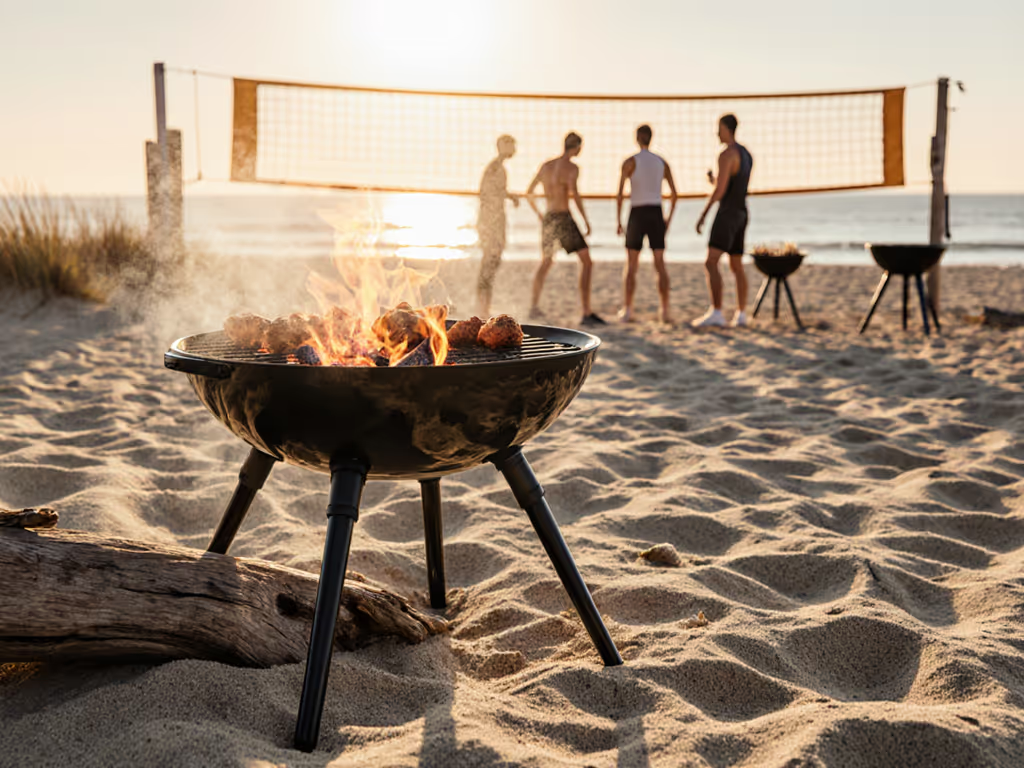
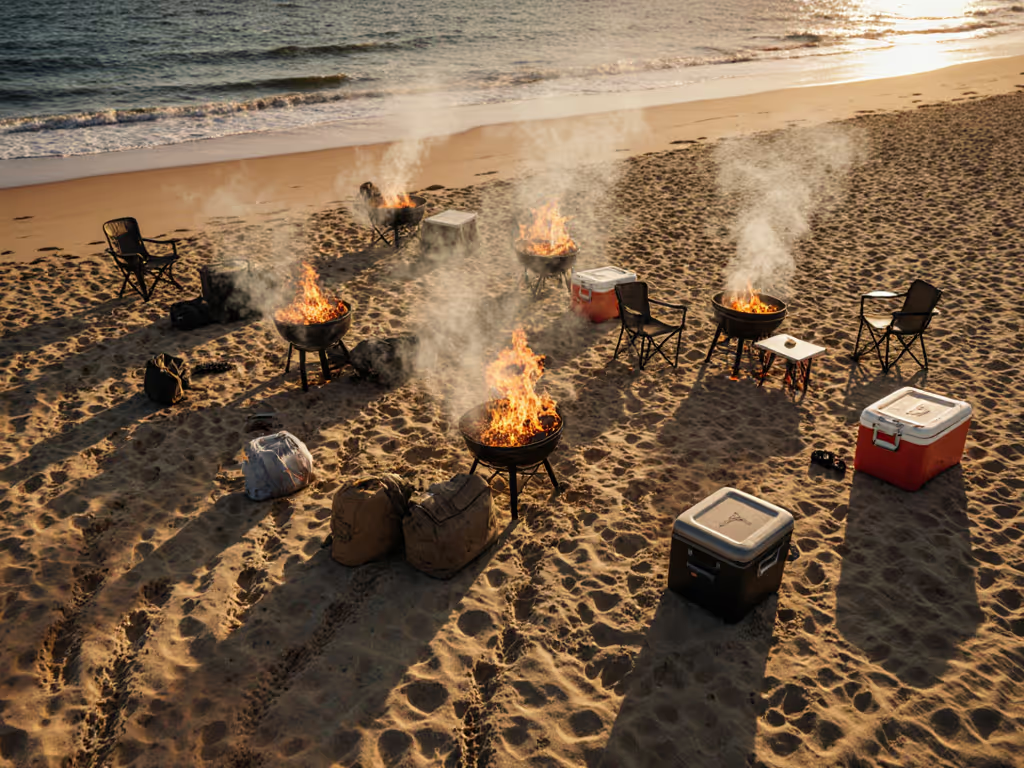
Tournament season brings your crew to the coast, and the pressure is on: produce consistent, tournament-grade food for 20-40 competitors across back-to-back shifts, all while sand gets into everything and wind plays havoc with your flames. A portable outdoor bbq grill isn't just about size (it's a system). The right kit handles sand-proof grill performance, fuel logistics you can actually execute, stable footing in loose terrain, and pack-away speed that doesn't slow the event. This guide walks you through five field-tested configurations that prioritize a modular kit mindset and cost-per-meal math, so you can serve confident meals and still fit everything back in your truck.
Why Portable Matters at the Beach
Beach competition cooking strips away excuses. For model picks built to handle salt, sand, and gusts, see our salt-resistant beach grills guide. You have no permanent setup, limited water access, wind gusts that shift direction mid-service, and sand that corrodes non-sealed systems. The stakes are real: flame failure mid-tournament looks unprofessional. Uneven heat means angry competitors. A grill that tips on damp sand becomes a liability and a lawsuit. Fuel anxiety, not knowing if propane is available or if your canister will perform in 45-degree salt spray, costs you mental real estate you need for execution.
Tourney organizers and catering teams who move between beach events, tailgates, and park competitions understand: the best rig isn't the one with the highest BTUs printed on the box. It's the one that stays reliable, repacks in under five minutes, and doesn't force you to hunt for a fuel type that won't be there. Pack-to-plate pragmatism means choosing a portable travel grill based on how it actually performs in your real context, not marketing specs.
How to Read This Guide
Each recommendation focuses on:
- Setup time & pack footprint: Can you go from vehicle to flame in under two minutes? Does it fit your carry mode?
- Wind & sand performance: Stable legs, flame resilience, corrosion-resistant materials.
- Fuel access & cost per meal: Can you buy it twice in town, or are you locked into boutique canisters?
- Cleanup & cooldown: Can you stow hot residue safely, and pack everything in five minutes?
- Tournament scalability: Can you feed 20 people efficiently in two shifts, or do you need multiple units?
--
1. Coleman Roadtrip (Propane Portable, Plug-&-Play Setup)
This is the urban weekender's mainstay for a reason: propane is everywhere, the footprint packs into most trunks, and setup time is genuine. Unfold the frame, lock the legs, connect a standard 1 lb propane canister (the kind you buy at any gas station or grocery for ~$5-8), and you have flame in 90 seconds.
Why it works for beach tournaments:
- Fuel is guaranteed. A standard 1 lb propane canister delivers about 2-3 hours of continuous medium-heat cooking, enough for 15-20 burgers per session. Carry the fuel you can buy twice in town: grab three canisters on your way to the event, and you're covered for a full day.
- Cook area is ~185 sq. inches. Not massive, but sufficient for a small-team tournament where you're working in shifts.
- Legs are sturdy enough on wet sand if you level the feet and avoid soft pockets; weight is ~37 lbs, so it's not light, but it's not a liability for vehicle transport.
- Cold-weather performance: propane performance dips below 40°F, so if you're cooking early morning or late fall, you'll notice slower preheat and slightly reduced flame. Not a deal-breaker, but plan for it.
Real-world caveat: The open-frame design means sand gets into the regulator valve and side burners if you're not disciplined with covers or a dedicated storage tray. Coastal events? Bring a basic plastic case or trash bag to isolate it post-cook before repacking. If you prefer gear that includes protection out of the box, check our portable grills with carry cases. Cost per meal (assuming 3-person teams, full burners, propane at $6/canister): roughly $0.30-$0.50 per person per session.
Pack-away speed: Disconnect fuel, cool for 2-3 minutes, fold, and stow. Total time: 5 minutes if you're organized.
--
2. Char-Broil Grill2Go (Compact, Wind-Resistant Frame)
If your beach events are windy, and coastal tournaments usually are, you need a grill that doesn't rely on exposed, floppy sides to direct heat. The Grill2Go is designed for wind: the cooking surface is recessed, the hood closes tightly, and the frame is low-profile so lateral gusts don't destabilize it as easily.
Why it works for sand and salt spray:
- Legs lock with wide feet, and the overall stance is narrow and stable. On sand, you want lower center of gravity; this achieves it.
- Corrosion resistance: stainless-steel grates and a powder-coated steel frame hold up better than bare cast-iron in salty environments. After a tournament, hose it down and dry the legs, no special coatings needed.
- Propane or butane compatible: depending on your region, you can swap in a 1 lb butane canister or stick with propane. This dual-fuel flexibility matters if your usual fuel isn't stocked locally.
- Cooking surface: ~160 sq. inches. Smaller footprint than the Coleman, but the recessed design means more efficient heat retention in wind.
Wind-resilience field test: In 12-15 mph beach breeze, this holds flame steadier than open-frame designs. You won't need to baby the ignition or shield constantly.
Cost per meal: Similar to the Coleman, around $0.35-$0.55 per person. Where you save is in consistency: fewer flare-ups and reshuffling due to wind means faster prep time and fewer repeat burgers.
Pack-away reality: Legs fold, fuel disconnects, and the whole unit fits into a compact trunk footprint. Weight is ~20 lbs, making it lighter than the Coleman and appealing if you're rotating between events and vehicle space is contested.
--
3. Snow Peak Home & Camp (Modular Dual-Fuel, Tournament-Scale)
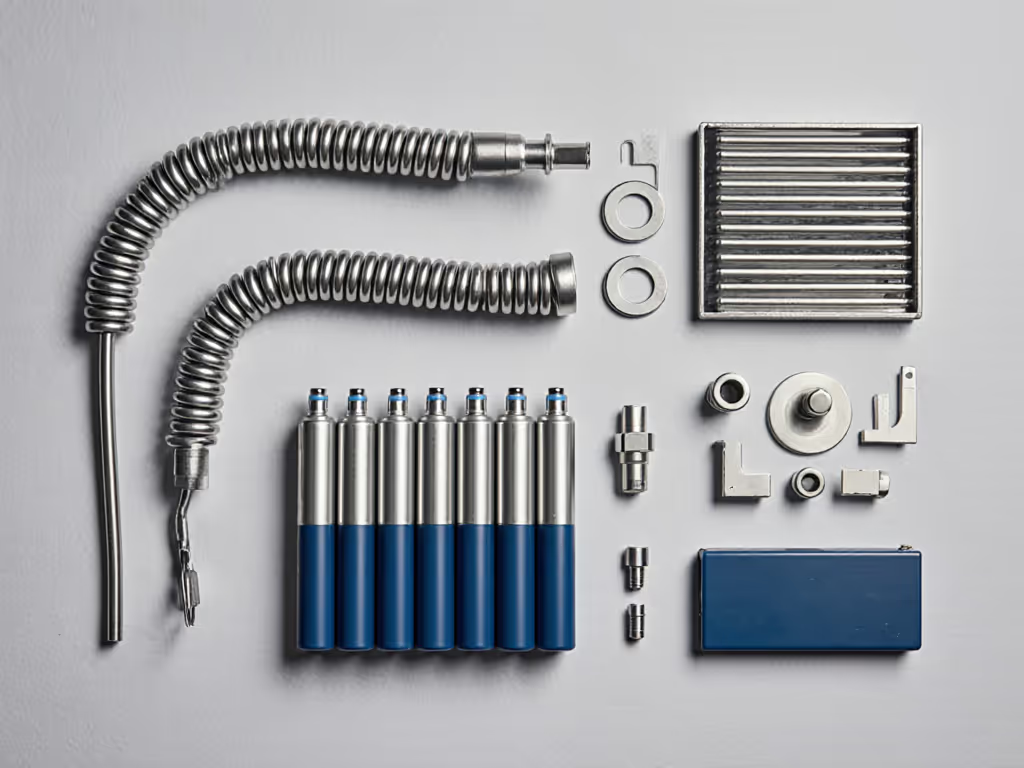
For serious tournament catering, you need a rig that scales cleanly. Snow Peak's modular system lets you run propane or butane cartridges individually, daisy-chain multiple units, or deploy two-zone cooking (high heat for sears, low heat for holds) without juggling two separate grills.
Why tournaments love this approach:
- Modularity: Each cartridge is independent. Lose flame on one side? Switch cartridges without shutting down the whole system.
- Two-zone capability: Set one burner high (500+ degrees for steaks and sears) and another at medium (for keeping cooked items warm or low-and-slow sides). Tournament structure often demands this flexibility.
- Fuel diversity: Cartridges are small and stackable. For a 6-hour tournament, carry 4-6 butane cartridges (each ~$2-3) or 2 propane adapters. Either way, you have redundancy. An overnight train trip taught me that redundancy and standard canisters matter more than betting on one fuel type; the same principle applies on a busy beach.
- Cooking surface: ~280 sq. inches across the two-zone system. Enough for 25-30 items per batch without crowding.
Real-world tradeoff: This is more expensive upfront (~$300-400 base unit plus cartridges). Cost per meal climbs slightly because you're using smaller, pricier cartridges ($3 each vs. $6 for a 1 lb propane can). But for tournament settings where efficiency and redundancy matter, the math justifies it: you spend ~$0.50-$0.70 per person, but you almost never have a flame-out and setup is ~60 seconds.
Pack-away & sand management: Cartridges slide into a compact case. The grill itself is narrow and low-profile. Hose it down post-tournament, dry the cartridge connections, and everything stacks flat. Total pack time: under 3 minutes.
--
4. Broilmaster P3 (Two-Zone Tournament Workhorse, Heavy Lift)
If your event feeds 40+ people per shift and you're grilling for hours, the Broilmaster brings professional-grade reliability to portable tournaments. The two-zone design (separate burner controls for high-heat and warm zones) lets your whole team work in parallel without coordination chaos.
Why large tournaments standardize on this:
- Cook area: ~405 sq. inches of cooking surface split into two independent zones. You can sear 8 steaks on one side while keeping 12 cooked items warm on the other. Zero bottleneck.
- Fuel efficiency: Designed for propane (1 lb canisters), and the burner configuration burns cleanly and predictably. On cost-per-meal math, you're looking at ~$0.40-$0.60 per person for a full tournament day because the high surface area and two-zone control mean less repeat cooking and fewer mistakes.
- Ignition & reliability: Piezo ignition plus a mechanical backup (match hole). Coastal salt spray and humidity can foul electronics, but Broilmaster's redundancy means you light it every time.
- Stability on sand: Heavy base, wide footprint, and locking casters (if you go with the optional cart). Even on damp sand, it's solid.
Caveat (and it's significant): This is heavy (~60+ lbs), and it's designed for vehicle transport, not backpacking. If your tournament is accessible by truck or golf cart, ideal. If you're hauling it 200 yards across soft sand by hand, you'll regret it. This is not a pack-light grill.
Real-world deployment: You show up 90 minutes before service starts. Assemble (maybe 8 minutes if you're building from a shipping frame), run propane lines, test ignition, and stage your mise-en-place. Then you grill non-stop for 4 hours. Pack-away takes 15 minutes because you need to cool it, disconnect gas properly, and secure everything for transport. Not a grab-and-go, but a deliberate, set-and-forget tournament engine.
Coastal durability: Stainless steel and powder-coated steel hold up. Post-event, hit it with fresh water and dry the regulator connections. One season of salt-spray exposure? Plan to replace seals and o-rings (~$40-60 in parts).
--
5. Ziggy Portable (Ultralight Pack-Ready, Van/Backpack Life)
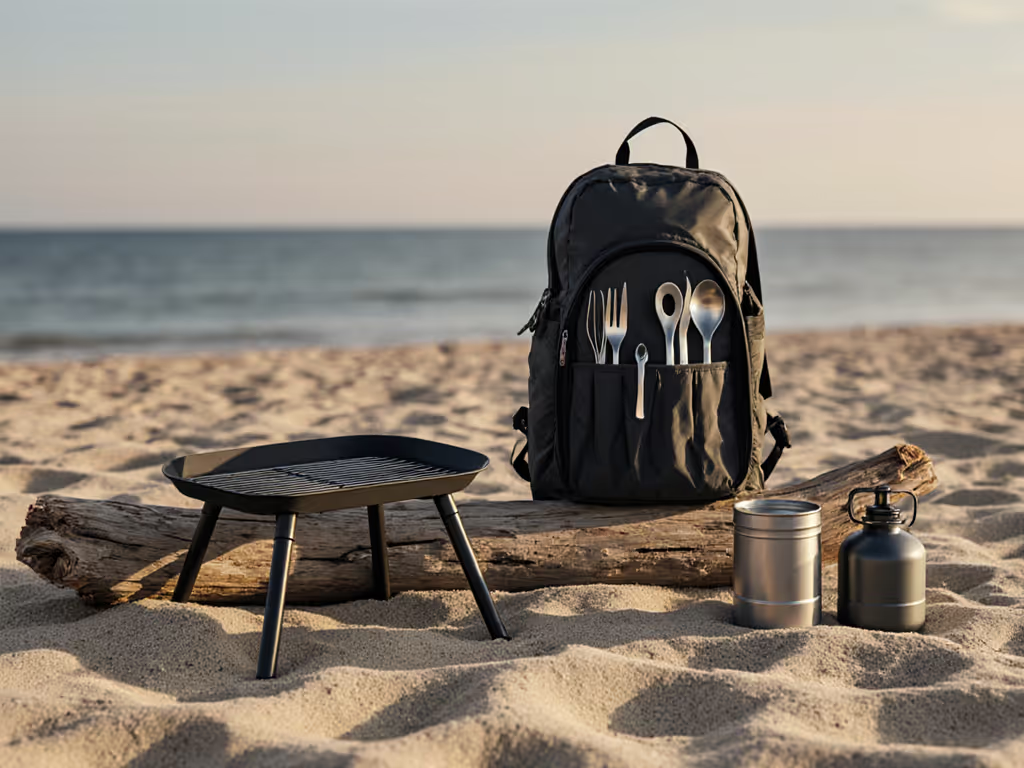
Not all tournaments are truck-and-golf-cart affairs. If your event is hip-pocket (you're biking there, or camping nearby, or running a pop-up from a van), you need under-5-pounds portability. The Ziggy is a minimalist rig: a foldable steel grate, a piezo burner, and a standard 1 lb propane canister connection.
Why ultralight matters for beach events:
- Weight: ~3 lbs (without fuel canister). You can carry it in a backpack, strap it to a pannier, or wedge it into an RV cubby. For van-based catering or bike-in tournaments, this changes the game.
- Setup: Unfold, place the fuel canister in the stand, twist on the regulator, ignite. 45 seconds, and you're cooking. No legs to lock, no frame to unfold, just geometry and fuel.
- Cooking surface: ~100 sq. inches. Enough for 4-5 burgers or a handful of fish fillets at a time. For a two-person crew or a small beach tasting event, perfect. For a 40-person tournament? This is a support grill, not your primary. Bring it alongside a larger rig for speed-ups.
- Cost per meal: Propane cartridge again, so $0.35-$0.50 per person if you're running it solo, but you'd be grilling slowly and probably turning folks away.
Pack-away reality: Cool for 60 seconds (it's small, so it cools fast), disconnect fuel, fold into a pouch, and stow. Total time: 2 minutes. Cleanup is minimal: just wipe the grate with a paper towel or cloth to catch residue, and pack it.
The catch: This is best paired with a second coastal sports equipment mindset: treat it as a specialist tool, not your main event grill. Use it for early-morning coffee-and-toast shifts, or as a backup while your main grill resets. Solo or pair-cooking? Absolutely primary. Tournament catering? Secondary piece.
--
Decision Framework: Choosing Your Beach Tournament Grill
Plain-Language Checklist
Ask yourself:
- How many people, how long?
- 5-15 people, under 2 hours → Ziggy or Char-Broil Grill2Go.
- 15-30 people, 4-6 hours → Coleman or Snow Peak.
- 30+ people, full day → Broilmaster (if truck access) or dual Snow Peak units.
- What fuel can you source twice in town?
- Propane 1 lb canisters (everywhere) → Coleman, Broilmaster, Ziggy.
- Butane cartridges (specialty stores, better for cold) → Snow Peak, Char-Broil (if dual-fuel).
- If unsure, stick with propane. Carry the fuel you can buy twice in town (it's not romantic, but it's reliable).
- Do you have vehicle access?
- Van/truck/car → Broilmaster (sets up once, runs all day).
- Bike/foot/backpack → Ziggy (ultralight).
- In-between (car parking 50+ yards away) → Snow Peak (modular, light enough to carry).
- Sand and wind exposure?
- Light beach breeze, brief event → Coleman.
- Coastal gusts, salt spray, all-day exposure → Char-Broil or Snow Peak (corrosion-resistant).
- Extreme wind, professional setup → Broilmaster (heavier, more stable).
- Pack-away speed priority?
- Under 2 minutes → Ziggy.
- 5-10 minutes → Coleman, Char-Broil, Snow Peak.
- 15+ minutes acceptable → Broilmaster.
Cost-Per-Meal Summary Table
| Grill | Fuel Cost | Cook Area | Session Feed | Cost/Person |
|---|
| Ziggy | $6/hr | ~100 sq. in. | 4-6 | $0.50-$1.00 |
| Char-Broil | $3-6 | ~160 sq. in. | 12-15 | $0.35-$0.50 |
| Coleman | $6-8 | ~185 sq. in. | 15-20 | $0.30-$0.50 |
| Snow Peak | $6-9 (cartridges) | ~280 sq. in. | 25-30 | $0.50-$0.70 |
| Broilmaster | $6-8 | ~405 sq. in. | 40-50 | $0.40-$0.60 |
--
Real-World Deployment Tips
Fuel Logistics
Carry one backup cartridge for every three you expect to use. On a 4-hour tournament, if you're running medium heat on a mid-size grill, assume one standard cartridge every 1.5-2 hours. Buy locally if possible; if sourcing is uncertain, bring cartridges from home. Know the fuel cut-off rule at your event venue (some parks ban propane after sunset or require inspections). For venue compliance and best practices, follow our portable grill safety checklist. Call ahead.
Sand & Corrosion Defense
Post-tournament, rinse the grill with fresh water and dry all connections and seals. Our portable grill cleaning guide walks through fast, travel-ready routines that prevent corrosion and grit buildup. Don't let salt residue sit overnight. Stainless-steel grates are your friend. Cast-iron will pit in saltwater environments within a season. If you're doing monthly beach events, invest in stainless or powder-coated steel models (Char-Broil, Snow Peak, Broilmaster) over bare iron.
Pack-Away Workflow
- Cool-down (2-3 min): Let residual heat dissipate; don't pack a hot grill.
- Wipe grates: Scrub stuck food with a paper towel or brass brush while warm, then cool further.
- Disconnect fuel: Turn off the valve, wait 5 seconds, unscrew the regulator or cartridge.
- Fold/collapse: Legs in, surfaces stacked, straps tight.
- Stow residue: Any grease or ash should be contained (foil tray, plastic bag) and sealed before it touches your vehicle.
Wind Management
If gusts exceed 15 mph, your flame will dance. Master gusty-day control with our step-by-step windproof temperature control guide. Strategies:
- Position the grill perpendicular to the wind (opening faces the wind, not the side).
- Lower your cooking surface if possible (get the grill closer to the ground).
- Use a small windscreen (portable metal or fabric shield, ~$20-40) on the windy side, not fully surrounding it (you need airflow).
- Reduce heat output and extend cook time slightly; you're trading speed for consistency.
--
The Tournament Mindset: Pack-to-Plate Pragmatism in Action
You arrive at the beach with your crew. The event brief is clear: feed the competitors, serve on schedule, don't embarrass the organizers. Your grill choice, fuel logistics, and setup speed are operational performance, not hobby decoration.
The modular kit mindset means you've thought through every constraint before you park: Will your rig fit in the staging tent if rain comes? Can you operate two units in parallel, or do you need one big rig? Do you have a fuel backup if a cartridge fails? Have you tested the ignition in salt spray, or are you crossing your fingers?
This is where pack-to-plate pragmatism wins. You don't choose the grill with the flashiest marketing. You choose the rig that removes friction between you and the meal. If you're a solo operator with a backpack and a bike, that's the Ziggy. If you're catering 50 people in a truck, that's the Broilmaster. If you're balancing portability with power and selling cost-per-meal on a beach tournament circuit, that's the Snow Peak or Char-Broil.
--
Your Next Step: Build Your Tournament Kit
This week:
- Confirm your event parameters: How many people? How long? What's the vehicle access?
- Scout local fuel availability: Visit the nearest gas station or grocery to your tournament venue. Note what propane and butane products they stock. Call ahead if you're unsure.
- Test your chosen grill at home: Set it up, light it, cook a sample meal, and time your pack-away. No surprises on tournament day.
- Assemble a sand-resistant kit: Stainless-steel grate, foil drip tray, plastic storage case, hose for rinsing, and backup fuel cartridge. Total cost: ~$50-80 for the accessories.
- Draft a checklist: List fuel requirements, setup time, pack footprint, and wind contingencies. Print it and tape it inside your travel case. Refer to it before every event.
Before your first tournament:
- Test your ignition in real conditions (not just your backyard).
- Verify fuel cartridges are legal and available at the venue.
- Practice setup and pack-away until you hit your target speed consistently.
- Review the event rules: any restrictions on open flame, charcoal, or carbon monoxide exposure?
Your beach tournament deserves a grill that shows up, performs on time, and packs clean. Choose with data, not hype. Cook with confidence, and let your results speak.