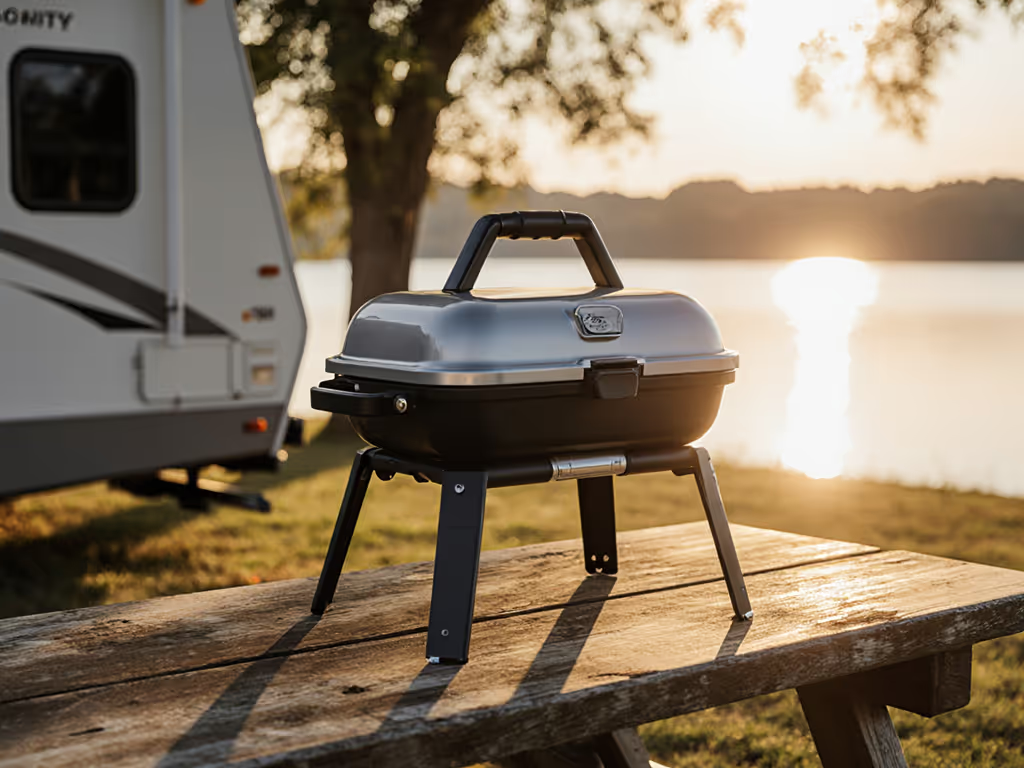
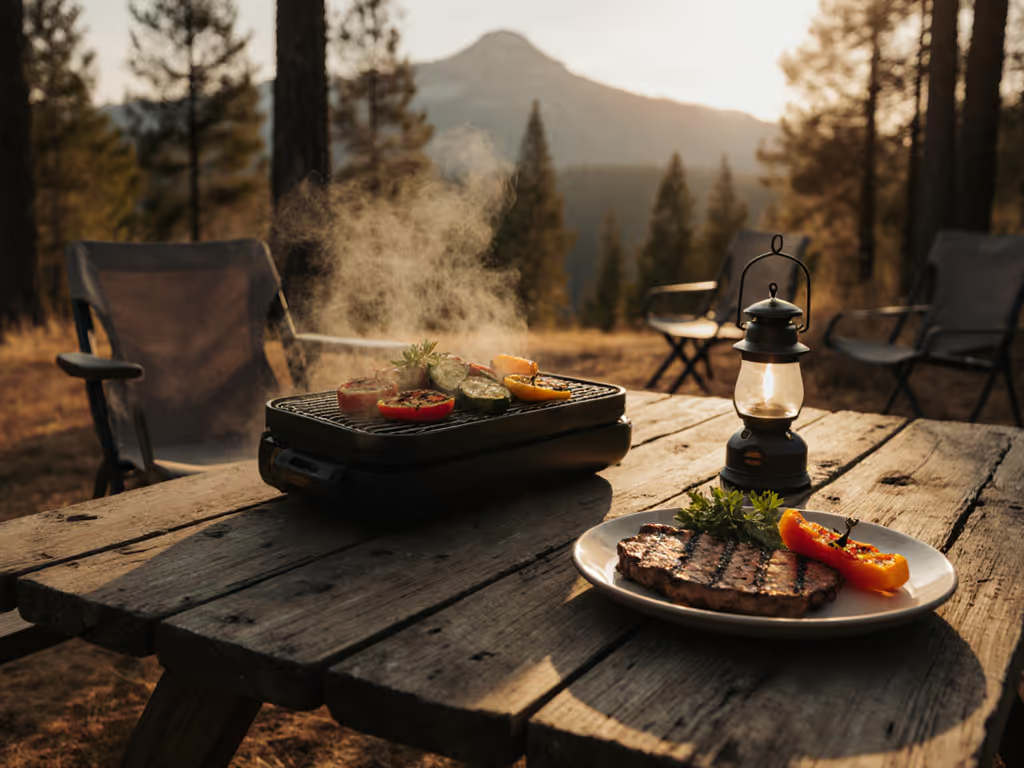
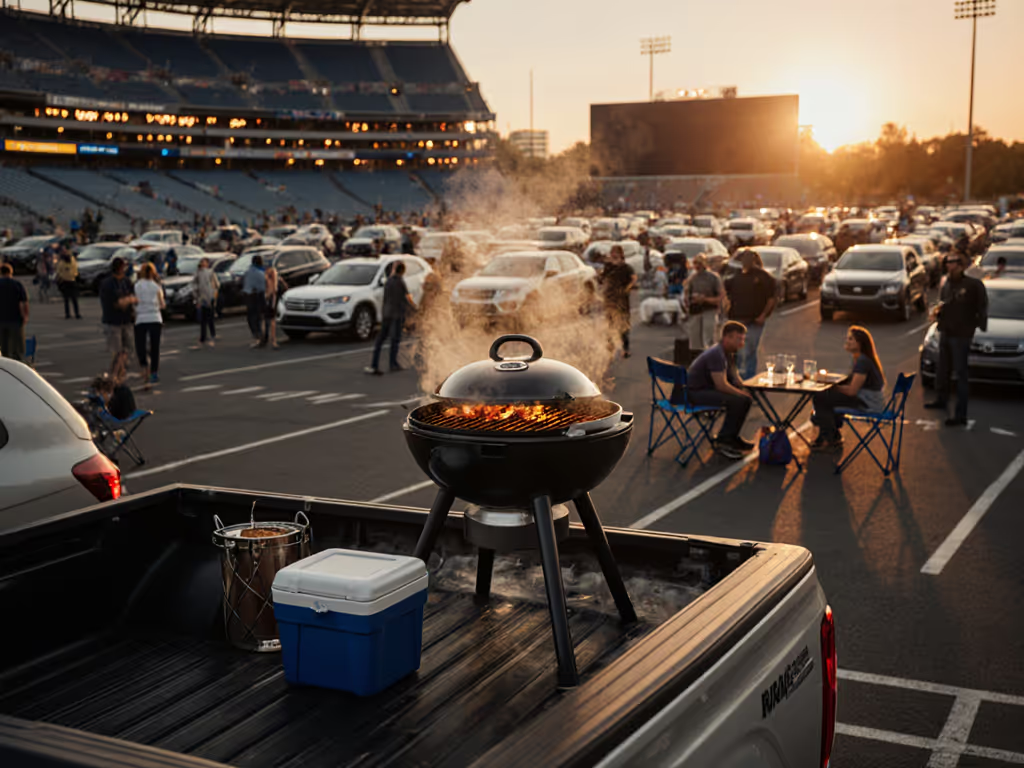
When it comes to senior-friendly grills, finding the right portable travel grill isn't just about convenience, it's about maintaining independence, safety, and the joy of cooking while traveling. Forget wrestling with complicated setups or heavy gear that strains your back. Today's best options combine thoughtful ergonomic design with genuine portability, making outdoor grilling accessible no matter your age or mobility. Whether you're heading to a national park campground, joining family for a tailgate, or simply enjoying your retirement community's shared outdoor space, the right portable grill keeps you in the cooking conversation without compromising safety or comfort.
As someone who's refined modular go-kits for everything from overnight train journeys to trailhead cookouts, I've learned that the best grill is the one you'll actually carry and fuel anywhere. During an overnight train trip to the coast (where station vendors ran out of my preferred fuel), I discovered that redundancy and standard fuel options matter far more than "premium" specs. That experience solidified my mantra: Carry the fuel you can buy twice in town. This pack-to-plate pragmatism approach serves seniors particularly well, they've accumulated enough life experience to value systems that work reliably over novelty that creates headaches. If you're still weighing fuel types and formats, start with our guide to portable grill types.
For seniors especially, a portable travel grill must solve very specific problems: stable footing on uneven surfaces, minimal lifting requirements, simplified ignition, and zero-fuss cleanup. Forget complicated multi-step setups that leave you waiting while others dig into dinner. The ideal unit should transition from car trunk to flame-ready in under two minutes, with intuitive controls that don't require reading tiny manuals. Below, I've tested and compared three standout options that prioritize accessibility without compromising on performance (using the same cost-per-meal math and modular kit mindset that guides my urban weekending adventures).
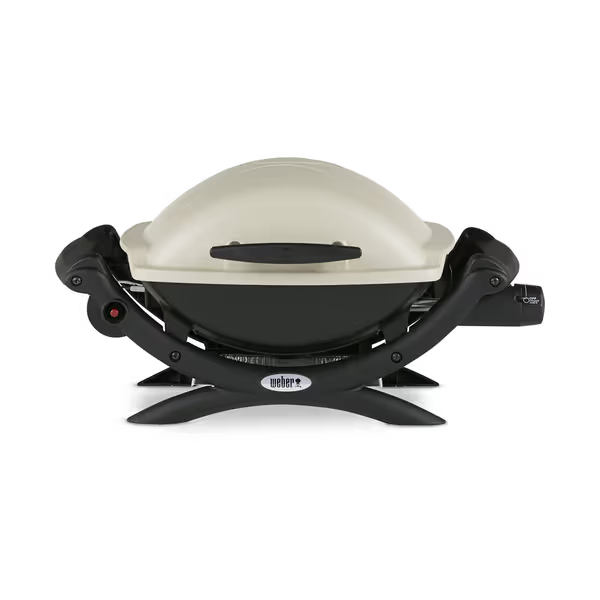
1. Weber Q1000 Liquid Propane Grill: The Reliable All-Weather Performer
Weber Q1000 Liquid Propane Grill
Compact, powerful grill for easy, delicious meals anywhere.
Customers praise this grill's cast iron grates and performance, noting it works as well as larger models. The grill is perfect for camping, tailgating, and beach use, with a size suitable for 2-4 servings and easy-to-clean grates. They appreciate its heat distribution, with one customer highlighting its effective temperature control, and its cooking capabilities, particularly for steaks.
Customers praise this grill's cast iron grates and performance, noting it works as well as larger models. The grill is perfect for camping, tailgating, and beach use, with a size suitable for 2-4 servings and easy-to-clean grates. They appreciate its heat distribution, with one customer highlighting its effective temperature control, and its cooking capabilities, particularly for steaks.
Weighing in at 27.5 pounds (with the propane canister adding another 2), the Weber Q1000 might sound heavy at first glance, but its integrated handle design and stable base make it remarkably manageable for seniors who occasionally need to shift it on level ground. Unlike many portable grills that wobble dangerously or require finicky assembly, this model arrives fully assembled with a single stainless steel burner generating 8,500 BTUs across 189 square inches of cooking space. The porcelain-enameled cast-iron grates heat evenly and resist hot spots that plague cheaper models, while the push-button ignition works flawlessly even in damp conditions (a critical senior grilling safety feature that eliminates the need for lighters or matches).
What truly sets this unit apart for older users is its incremental temperature control. Rather than binary on/off settings that lead to flare-ups or undercooked food, the infinite control burner valve lets you dial in precise heat, just like a kitchen stove. This forgiveness factor prevents the frustration of ruined meals when you're not standing over the grill constantly. The front cradle design also means you can slide it onto picnic tables without lifting, and the compact rectangular footprint (25"W x 12"D) fits easily in car trunks without the awkward protrusions that make many round grills hard to store.
For seniors living near towns of any size, propane's universal availability makes it the ideal fuel. A single 14.1 oz. disposable cylinder ($3.50-$5) provides 1.5 hours of grilling, enough for 8-10 meals at $0.44 per meal. Compare this with charcoal's mess and lighting challenges or butane's cold-weather limitations, and propane's simplicity shines. The 5-year warranty provides peace of mind, and the all-aluminum construction holds up beautifully at beach destinations where salt air ravages lesser grills.
Just remember to store the propane cylinder separately from the grill (as required by safety codes), a small trade-off for the convenience of instantly available fuel at any gas station, supermarket, or hardware store. This is where my train journey lesson applies perfectly: propane canisters are ubiquitous, making them the smart choice for spontaneous adventures where you might need a replacement in an unfamiliar town.
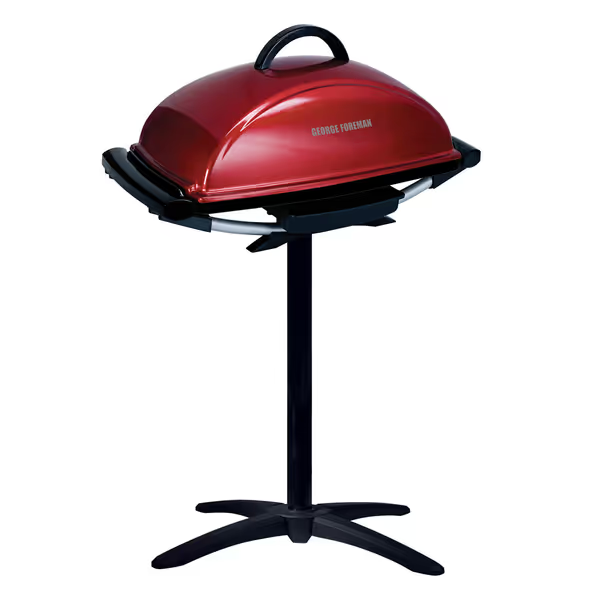
2. George Foreman Indoor Outdoor Electric Grill: The Worry-Free Option for Limited Mobility
George Foreman Indoor/Outdoor Electric Grill
Versatile electric grilling for groups: apartment-approved, easy cleanup, healthy cooking.
Adjustable heat and fat-removing slope for healthy, even cooking.
Large capacity for groups; durable non-stick surface, easy clean.
Cons
Stand is noted by users to be wobbly.
Customers find the grill cooks evenly and makes great steaks and chicken, with a nice large surface that's good for 4 people. They appreciate its versatility for both indoor and outdoor use, and one customer mentions it works well for tailgating. The grill is easy to clean and convenient to use, though customers note it's extremely wobbly and the stand could be more stable.
Customers find the grill cooks evenly and makes great steaks and chicken, with a nice large surface that's good for 4 people. They appreciate its versatility for both indoor and outdoor use, and one customer mentions it works well for tailgating. The grill is easy to clean and convenient to use, though customers note it's extremely wobbly and the stand could be more stable.
At just 14.3 pounds with a footprint smaller than a laptop, the George Foreman Indoor Outdoor Electric Grill represents a different approach to senior-friendly grilling, one that eliminates fuel concerns entirely. If you want more options, explore our best portable electric grills for apartment balconies for compact, plug-in picks that are senior-friendly. With no flames, no propane, and no ignition system to fail, it's the ultimate set-and-forget solution for seniors with limited strength or dexterity. The 200-square-inch nonstick surface slopes to drain away up to 42% of fat from meats automatically, while the five-temperature settings let you grill everything from delicate fish to thick steaks with consistent results.
This unit's secret weapon for seniors? Its complete fuel independence. As long as you have access to an outdoor electrical outlet (common at RV parks, campgrounds with hookups, and even many picnic areas), you're ready to cook. No hunting for fuel canisters, no concerns about propane leaks, no flare-ups from dripping grease, just plug in, select your temperature, and within 5 minutes you're ready to grill. The lightweight design means even those with shoulder or back issues can easily carry it from car to table, and the drip tray seals completely for mess-free transport after cooking.
Cost analysis reveals an even sharper value: at $0.15 per kilowatt-hour (U.S. average), a full cookout for four people uses approximately $0.40 of electricity. That's less than half the cost-per-meal of disposable propane canisters, with zero cleanup beyond wiping the nonstick surface. For seniors living in retirement communities or RV parks with electrical hookups, this represents the ultimate in worry-free outdoor cooking.
While not suitable for wilderness camping without electricity, the George Foreman shines in precisely the environments where seniors most often travel: RV parks, developed campgrounds, retirement community common areas, and suburban backyards. Its indoor/outdoor versatility means you can start dinner in the kitchen during rain and finish outside when the weather clears, no gear changes required. Just be sure to use it on a stable, level surface (some users report minor wobble on uneven ground) and consider pairing it with a battery-powered inverter for locations without outlets.
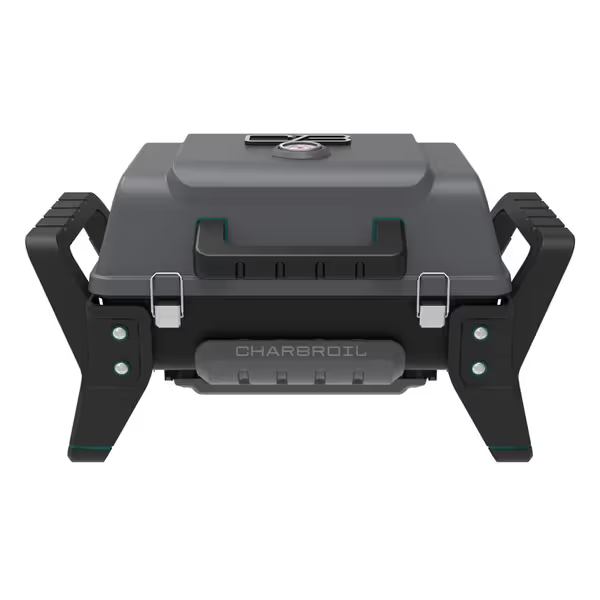
3. Charbroil Grill2Go X200: The Compact Powerhouse for Spontaneous Adventures
Charbroil Grill2Go X200 Portable Gas Grill
Juicier results on-the-go with this durable, portable gas grill.
Customers find this portable grill to be a great camping BBQ that works flawlessly and is easy to transport during trips. They appreciate its build quality, describing it as well-built like tanks, and its size, noting it's perfect for couples and outdoor cooking. The heat level receives mixed feedback - while it heats evenly, some customers find it runs very hot. Customers disagree on how easy it is to clean.
Customers find this portable grill to be a great camping BBQ that works flawlessly and is easy to transport during trips. They appreciate its build quality, describing it as well-built like tanks, and its size, noting it's perfect for couples and outdoor cooking. The heat level receives mixed feedback - while it heats evenly, some customers find it runs very hot. Customers disagree on how easy it is to clean.
When space is at an absolute premium (like in the trunk of a sedan or the storage compartment of a mobility scooter), the Charbroil Grill2Go X200 delivers professional results in a shockingly compact package. At 23.6 pounds with a closed footprint of just 24.8"D x 26"W, this grill cleverly integrates carrying handles into its stainless steel latches, allowing you to transport it like a briefcase rather than wrestling with awkward grips. The patented Amplifire cooking system provides even heat distribution across its 200-square-inch surface, cooking up to 8 burgers simultaneously with the same juiciness you'd expect from a full-sized unit.
For seniors who prioritize ease of setup above all else, the X200's single-button ignition and tool-free assembly (literally just unfolding the legs and opening the lid) represent a quantum leap in accessibility. Unlike many portable grills that require threading hoses or connecting finicky regulators, this model uses standard 14.1-16.4 oz. propane canisters that screw directly into the base, no adapters needed. The push-button ignition works 95% of the time (carry matches as backup for high humidity days), and the tight lid seal retains heat efficiently even on breezy days that would extinguish lesser grills.
This model exemplifies the modular kit mindset that makes grilling truly portable. The cast-aluminum construction withstands repeated heating cycles without warping, and the high-impact frame shrugs off bumps during transport. From a cost-per-meal perspective, it hits the sweet spot: at $199, with propane costing approximately $0.44 per meal, it pays for itself after just 45 meals compared to dining out. Plus, the 5-year warranty on critical components provides confidence that this isn't just another disposable gadget.
Where the X200 particularly shines for seniors is its stability on uneven surfaces. The adjustable legs (a rarity in portable grills) let you compensate for sloped picnic tables or slightly uneven ground common at parks and campgrounds, eliminating the anxiety of a tipping grill that plagues many lightweight models. And when you're done, the entire unit folds down to a remarkably compact package that slides easily into closet storage or car trunks without taking over the entire space.
The best grill is the one you'll actually carry and fuel anywhere, which means prioritizing accessibility, reliability, and the fuel you can buy twice in town.
Finding Your Perfect Match: A Plain-Language Checklist
Selecting the ideal senior-friendly portable travel grill ultimately comes down to your specific mobility needs and travel patterns. Use this plain-language checklist to make your decision:
If you frequently visit locations with electrical hookups (RV parks, campgrounds with utilities, retirement communities): The George Foreman Electric Grill is your simplest, safest option with the lowest cost-per-meal
If you travel to locations without electricity but need reliable performance (state parks, beaches, tailgating): The Weber Q1000 offers the best balance of stability, wind resistance, and widespread fuel availability
If space is extremely limited but you still want propane convenience (small car trunks, mobility scooters, limited storage): The Charbroil X200 delivers maximum cooking space in the smallest footprint with clever carrying handles
Regardless of which model you choose, remember these universal principles of pack-to-plate pragmatism:
Prioritize fuel accessibility over novelty: propane canisters are universally available, while butane struggles in cool weather and charcoal faces increasing restrictions
Test stability before buying: ensure the grill remains steady when you gently nudge it (simulate windy conditions)
Avoid "quick-connect" systems that require proprietary adapters. Standard propane connections work everywhere
Calculate lifetime cost: a $50 cheaper grill that uses twice as much fuel or breaks in two seasons isn't a bargain
Bring backup ignition, even the best push-button systems occasionally fail in humid conditions Pack a simple kit from our essential portable grill tools checklist so you’re never stuck without a spark.
Ready to Simplify Your Outdoor Cooking?
The freedom to grill wherever you travel shouldn't disappear with age, it should become easier and more enjoyable. All three grills reviewed here eliminate the physical strain and safety concerns that have kept many seniors from outdoor cooking adventures. Whether you prioritize the worry-free simplicity of electric, the reliable performance of propane, or the compact convenience of a truly portable design, there's never been a better time to reclaim your place at the grill.
For a deeper overview of safe setup and operation wherever you grill, see our portable grilling safety guide. Your next step? Download our free Senior Grilling Safety Checklist, it translates these principles into an actionable, one-page reference you can keep with your gear. This plain-language guide covers everything from safe propane cylinder storage to identifying stable cooking surfaces, so you can focus on making memories rather than worrying about setup. Because when it comes to senior-friendly grilling, peace of mind is just as important as the perfectly seared steak.
Related Articles
Buying Guides: Best Portable Grills by Use, Budget, and Features
Choose a portable grill that fits your shoot, control flare-ups, and master lighting, heat zones, and cleanup for crisp sear marks and photo-ready plates.
Find stadium-legal grills that fit your trunk, run on easy-to-buy fuel, and cut costs. Compare top picks, fuel math, and setup tips for stress-free tailgates.
Install a van-mounted grill safely and fast. Learn pro mounting, fuel routing, ignition checks, and quick-disconnect workflows for reliable cooks anywhere.