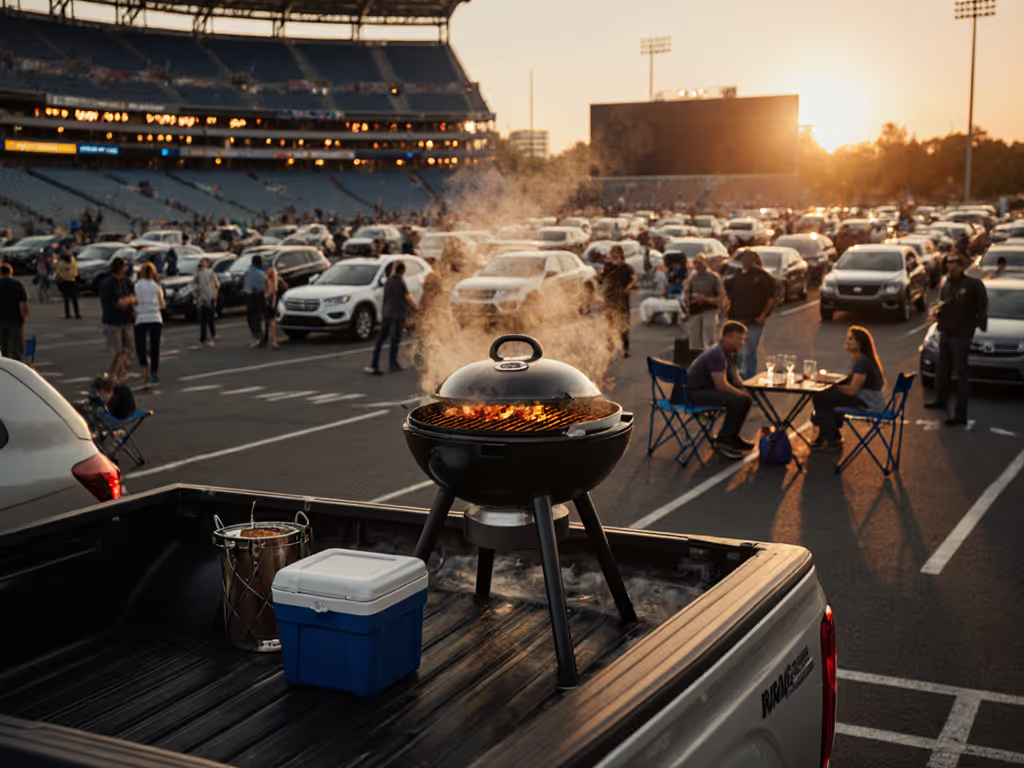
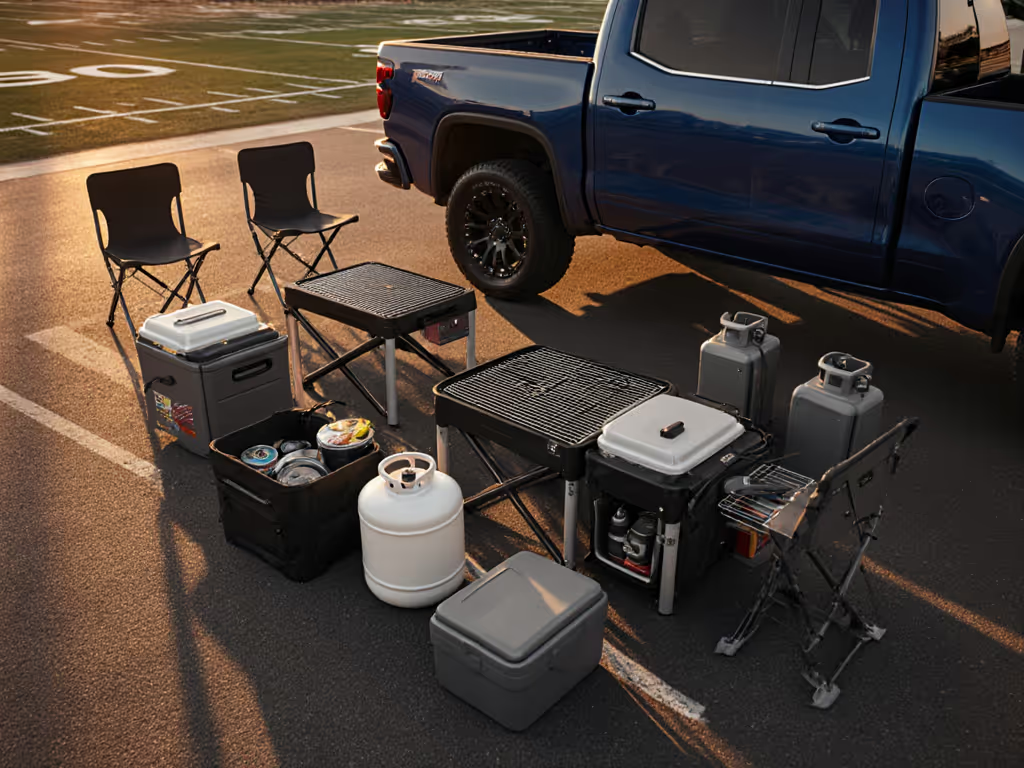
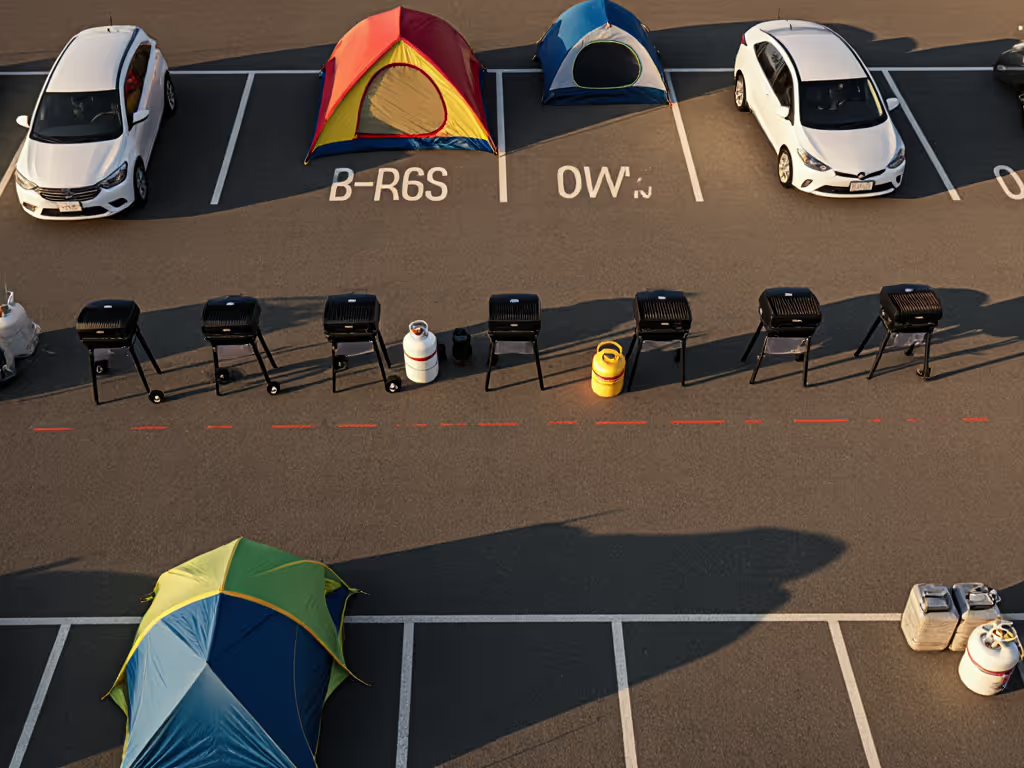
A stadium-compliant tailgating grill isn't about flashy BTUs or luxury finishes, it's about regulations that won't get you asked to leave, fuel you can actually buy at the local gas station, and a setup that fits in your trunk without denting your fender. Most tailgaters face the same friction: which legal parking-lot grill options won't trigger venue security? Will propane work in November? Can I pack this without fumbling with sharp edges? The difference between a weekend well-spent and a frustrated evening often comes down to choosing a rig that respects both the rules and your packing constraints.
Why Stadium Compliance and Fuel Logistics Matter
Major sporting venues enforce tailgating regulations for good reason: fire safety, fuel containment, and site management. Most U.S. stadiums permit propane or charcoal in designated areas, but ban open flame, single-use butane canisters, or portable stoves with uncontained fuel. The smart move is choosing gear built for these constraints, not gear that forces you to guess whether you're legal. Review our portable grilling safety guide to understand banned fuels, placement rules, and risk-free setup in crowded lots.
Fuel logistics are the hidden cost layer. Carry the fuel you can buy twice in town (this isn't just convenience, it's the difference between confidence and anxiety). If your grill demands boutique cartridges or exotic pellet suppliers, you're one gas station closure away from a failed meal. Stadium tailgating equipment that runs on standard 1-lb propane cylinders, widely available charcoal, or common wood pellets makes you self-sufficient and keeps your total cost-per-meal math honest.
The 5 Best Stadium-Compliant Tailgating Grills
5. Traeger Ranger - The Compact Pellet Play
Why it's stadium-legal: Wood pellet grills are permitted in most stadium parking lots when deployed on a stable base away from tent fabric. The Traeger Ranger trades portability for precision low-and-slow cooking.
The fit: At roughly 40 lbs, it's not trunk-friendly for every build, but fits nicely in an RV or tailgate truck bed. The compact footprint (about 20 inches wide) makes it a conversation starter in tight spaces without hogging the lot.
Fuel story: Traeger pellets run 15-20 lbs per cook day depending on heat target. Pellets are heavier and bulkier than propane, but they're temperature-stable across seasons and wind-resistant. If you're torn between pellets and propane, see our portable pellet vs gas comparison for convenience, flavor, and portability trade-offs. One bag costs around $8-$12 and lasts a full tailgate for 4-6 people, yielding roughly $2-$3 cost-per-meal for the fuel alone, higher than charcoal or propane, but you gain serious smoke flavor and thermostat-level temperature control.
Real trade: You gain serious smoke flavor and temperature control. You lose sub-5-minute setup and pay a weight penalty. If your tailgate is scheduled and you have vehicle transport, this is the flex play.
4. Broil King Keg 5000 - The Kamado-Style Sweet Spot
Why it's stadium-legal: Ceramic-style kamado grills (with a solid stand, not a cart) are broadly accepted because they're inherently contained, stable, and fuel-efficient. The Broil King Keg 5000 offers ceramic performance at roughly half the weight of traditional ceramic competitors.
The fit: Steel kamado construction keeps it lightweight enough (~35 lbs) for truck beds and RV drawers; the low profile won't fight wind like tall grills. The secondary chrome-coated rack gives you 480+ square inches, making it one of the largest cooking surfaces on this list, genuine batch cooking for 8+ people or serious two-zone capability.
Fuel story: Charcoal-fueled, so you sidestep all fuel logistics. Grab a 10-lb bag at any convenience store for $6-$10. One bag yields multiple cooks. Cost-per-meal typically lands under $1.50 in fuel, making it one of the cheapest per-serving options across all five models. This is where the modular kit mindset meets real savings.
Real trade: Charcoal is messier to pack; ash cleanup requires a disposal strategy (bring a small collapsible bin or metal bucket for post-cook drip). For mess-free packaway, follow our portable grill cleaning guide tailored to travel setups and stadium rules. But if your tailgate allows charcoal and you want max cook area with minimum fuel cost, this wins on price-to-performance every time.
3. Coleman RoadTrip 285 - The Do-Everything Workhorse
Why it's stadium-legal: Three adjustable burners and 285 square inches of cast-iron grated cooking space make it versatile enough for any venue's rules. Propane-fired (standard 1-lb cylinders) and permitted at virtually every North American stadium.
The fit: Cast-iron construction paired with rust-proof aluminum coating hits that durability sweet spot. Legs fold partially for storage, though it's solidly truck-bed or large-SUV-trunk territory at around 65 lbs. Stable on uneven grass or sand thanks to a wide base and recessed wheels that lock in place.
Fuel story: Propane is the gold standard for stadium tailgates. A 1-lb cylinder (available at any gas station, hardware store, or grocery chain) costs $3-$5 when refilled. One cylinder runs the Coleman 285 for 2-3 hours of mixed cooking, yielding $1.50-$2.50 fuel cost per tailgate meal depending on burner load. The math is transparent and repeatable everywhere you travel. Easy.
Real trade: Weight and bulk mean less packability, it's not a grab-and-go like the Weber Smokey Joe. But unmatched setup speed (under 2 minutes flame-on) and foolproof performance in wind are worth the tradeoff if you're a veteran tailgater with vehicle transport. This is the reliable baseline. Dial in stability on blustery days with our windproof temperature control guide.
2. Weber Traveler Portable Propane Gas Grill - The Pack-Light Leader
Why it's stadium-legal: Compact, propane-fired, and designed explicitly for event logistics. Most venues welcome it without question or special registration.
The fit: The modular kit mindset shines here. The Weber Traveler collapses into a suitcase-like form factor that slides into trunks, RV lockers, or vehicle underseat storage. It weighs around 30 lbs fully assembled, making it genuinely portable for weekend adventurers who refuse to sacrifice cook capacity for packability.
Fuel story: Runs on standard 1-lb propane cylinders, or adapts to larger 20-lb tanks with a regulator for multi-day tailgates. Cost-per-meal aligns with the Coleman: roughly $1.50-$2 per tailgate in fuel, with the advantage that you can source cylinders anywhere in North America. Plain-language logistics: ask any attendant for "a refilled 1-lb propane cylinder" and you're done.
Real trade: Smaller cooking surface (~285 sq in.) than the Keg 5000 means you're cooking in batches for groups larger than 4-5 people. But if packability is your prime constraint (especially for apartment dwellers, van lifers, or anyone without garage storage) this is the answer.
1. Weber Smokey Joe Premium Charcoal Grill - The Gold Standard for Pack-to-Plate Pragmatism
Why it's stadium-legal: Charcoal is permitted at virtually every U.S. stadium and major venue. Compact, self-contained, and zero fuel logistics friction (no regulator compatibility, no altitude derating, no cold-weather vapor pressure worries).
The fit: The Weber Smokey Joe is the rig that proves good design beats marketing specs. At under 10 lbs, it fits a day pack, a bike pannier, or a car's cupholder gap. No legs to wobble on grass; no ignition to fail in wind. The hinged lid and adjustable vents give you low-and-slow capability (200°F smolder with lid nearly closed) or hot-sear (500°F+ with full airflow) in a footprint smaller than a car tire.
Fuel story: Charcoal briquettes run $2-$4 for a small sack, and a single bag yields multiple cooks or a full tailgate for 2-4 people. Cost-per-meal bottoms out around $0.75-$1.00. The cheapest option on this list, and the math scales up cheaply for larger groups. No fuel sourcing anxiety: charcoal is sold at every supermarket, gas station, and hardware store from March through October, and often year-round in urban areas.
Real trade: You sacrifice some burner volume and searing speed compared to propane rigs, but you gain legendary reliability, zero ignition fiddling, and the flexibility to cook anywhere a stadium allows a charcoal grill. The learning curve is shallow, even beginners intuitively manage two-zone cooking with charcoal and lid control. On an overnight train to the coast years back, I packed a folding Weber and both butane and propane options. The station vendor was out of butane; my tiny adapter saved dinner for four. That ride taught me that redundancy and standard canisters matter more than boutique fuels, and that smart packing beats buying again.
Quick Comparison Table
| Grill | Fuel Type | Weight | Cook Area (sq in) | Cost Per Meal (Fuel) | Setup Time | Best For |
|---|
| Weber Smokey Joe Premium | Charcoal | ~10 lbs | ~147 | $0.75-$1 | 3-5 min | Backpackers, minimalists, ultra-portable |
| Weber Traveler | Propane (1-lb) | ~30 lbs | ~285 | $1.50-$2 | <2 min | Urban weekenders, trunk-ready compact rigs |
| Coleman RoadTrip 285 | Propane (1-lb) | ~65 lbs | ~285 | $1.50-$2 | <2 min | Vehicle-based tailgates, groups of 4-6 |
| Broil King Keg 5000 | Charcoal | ~35 lbs | ~480 | $1-$1.50 | 5-8 min | Large groups, maximum cook area, long cookouts |
| Traeger Ranger | Wood Pellets | ~40 lbs | ~250 | $2-$3 | 10-15 min | RV/truck bed tailgates, smoke flavor, precision temp |
How to Ensure Your Grill Is Stadium-Compliant
Before you pack your grill for gameday, verify three non-negotiables:
-
Fuel type approval. Call the venue's parking management or tailgate coordinator. Ask explicitly: "Are propane grills allowed? Charcoal? Pellet smokers?" Most stadiums have a written tailgating policy posted online or available by phone. For more game-day options, check our best portable grills for tailgating with models vetted for power, portability, and stadium compliance. Write the answer down and keep it with your grill.
-
Contained fuel system. Stadium rules almost universally ban open-flame stoves and loose fuel canisters. All five grills on this list keep fuel in sealed containers (propane canisters, charcoal in a chamber, pellets in a hopper), so you're covered. No leaks, no spills, no surprises.
-
Safe distance from tents and vehicles. Most venues require grills to be 10+ feet from combustible materials. This is less about your grill and more about your setup discipline, place it downwind and away from canvas, and you'll never draw attention from security. Simple and effective.
Final Recommendation: The Cost-Per-Meal Framework
Pack-to-plate pragmatism means choosing your grill around what you'll actually carry and fuel, not around magazine reviews or neighbor bragging rights. Use this hierarchy:
- If you hike or bike to tailgates: Weber Smokey Joe ($0.75-$1/meal fuel, <10 lbs, ultra-legal everywhere).
- If you drive alone or with a partner and value packability: Weber Traveler ($1.50-$2/meal fuel, collapses flat, propane standard everywhere).
- If you're the tailgate organizer bringing 4+ people and want speed: Coleman RoadTrip 285 ($1.50-$2/meal fuel, maximum burner control, under-2-minute ignition).
- If you want the largest cook area or charcoal-smoked flavor: Broil King Keg 5000 ($1-$1.50/meal fuel, heavyweight but 480+ sq in. surface, lowest fuel cost at scale).
- If you have an RV or truck bed and love smoke: Traeger Ranger ($2-$3/meal fuel, mobile smoke station, thermostat precision for low-and-slow).
The best portable travel grill is the one you'll actually carry and fuel anywhere, not the one with the highest peak temperature or the shiniest finish. All five of these options meet stadium compliance, source fuel from local retailers, and deliver genuine value across 1,500+ tailgating events nationwide. Choose the one that matches your transport mode and group size, and you'll wonder why you ever fussed with complicated alternatives. Really.
Next Steps: Your Stadium-Ready Setup
Do this today:
-
Check your venue's rules in writing. Email or call tailgate management and confirm fuel type, placement distance, and any other grill restrictions. Screenshot the email or write it down on a laminated card to bring on gameday.
-
Pick your grill from this list based on your transport. Backpack or bike? Weber Smokey Joe. Trunk? Traveler or RoadTrip. Truck bed or RV? Go big with the Keg or Traeger. This decision should take 5 minutes, not a week.
-
Source your fuel locally before gameday. Visit a gas station, hardware store, or grocery chain near your home and confirm that your chosen fuel is in stock. Pick up a small amount and test it once. This removes gameday friction and prevents the "I can't find propane" scenario that derails entire weekends.
-
Build a plain-language checklist. Note your grill's fuel type, required cart/stand or fuel cylinder size, and any venue-specific rules. Laminate it or snap a phone photo so your whole group knows what's legal and where to set up.
-
Cook one test meal at home. Whether it's the Smokey Joe or the RoadTrip, run a full practice cook in your driveway. Time your setup, test your ignition (if applicable), and dial in your heat zones. Confidence at home translates to smooth execution on gameday, and your guests will taste the difference between a seasoned cook and a nervous fumbler.
Your tailgate just got legal, efficient, and stress-free.