Commercial Portable Grills: Health Code Compliant Picks
By Amina Haddad • 2nd Dec
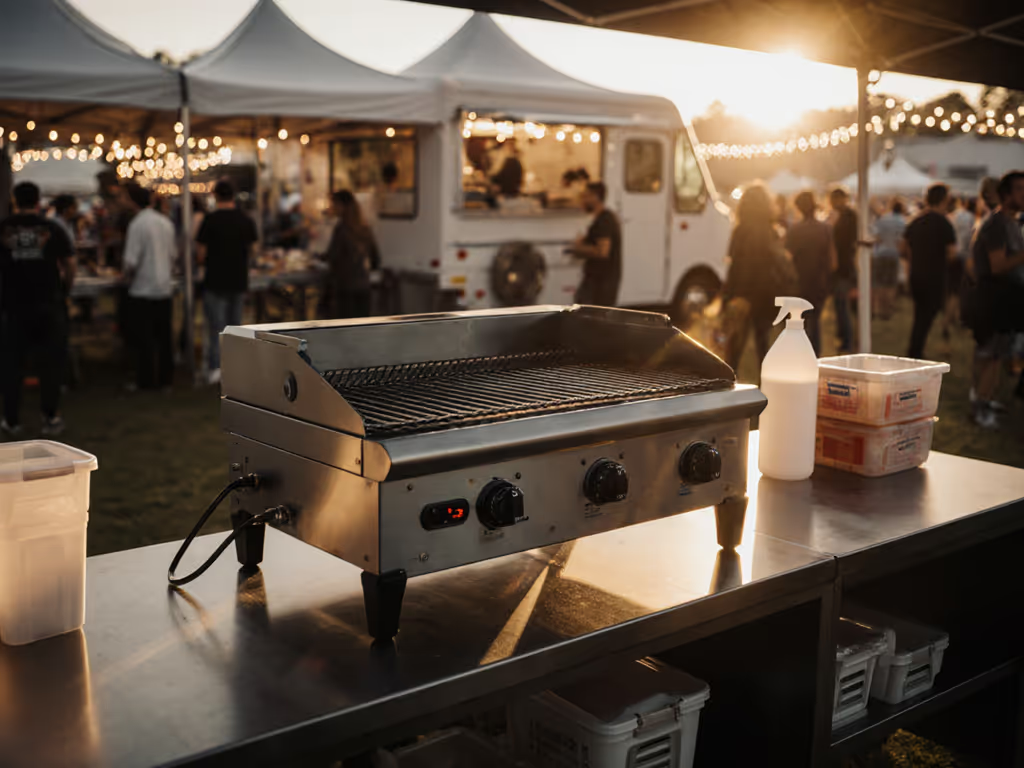
When planning your mobile food operation, selecting the right food truck grill or portable travel grill means balancing health department requirements with field practicality. As environmental educators and industry specialists have noted in recent USDA-FSIS guidelines, health code compliance isn't just about passing inspections, it's about building customer trust through demonstrable food safety practices. This guide addresses your specific concerns about street food cooking equipment that meets regulations while fitting your mobility needs. I'll translate complex policy language into practical gear choices that protect both public health and your reputation.
Why Health Code Compliance Matters for Your Portable Cooking System
How do I ensure my pop-up restaurant grill meets local health department requirements?
Health departments evaluate three critical aspects of your food cart cooking system: temperature control, grease management, and material safety. The FDA Food Code requires all cooking surfaces to reach and maintain minimum internal temperatures (165°F for poultry, 145°F for meats with 3-minute rest time). Portable units must demonstrate consistent heat zones (something inspectors verify with infrared thermometers during inspections).
The second requirement involves grease capture: uncovered drip trays violate most municipal codes. I witnessed a pop-up vendor in Denver lose their permit because grease splatter reached the ground surface, a violation preventable with proper shielding. Your grill needs a contained grease management system that collects runoff without pooling.
Material safety is the third pillar. Stainless steel (304 grade minimum) is universally approved for food contact surfaces. Aluminum and cast iron require specific certifications. I once reviewed a vendor's application where the inspector rejected their 'rust-resistant' cast iron griddle because it lacked NSF certification. Your materials must withstand frequent cleaning without degradation.
Heat you can explain to a ranger, pack you can trust.
What's the single most common health code violation with portable grills?
Based on 2024 NACM data, improper grease management accounts for 63% of grill-specific violations at mobile food operations. For step-by-step maintenance routines that keep grease under control, see our portable grill cleaning guide. This includes:
- Drip trays without liquid containment
- Inadequate height clearance between cooking surface and grease collection
- Lack of secondary containment for potential overflow
- Uncovered grease storage during transport
A functional grease management system must:
- Capture all runoff
- Allow for safe disposal without cross-contamination
- Prevent re-aerosolization during cooking
- Maintain structural integrity when hot
During my dawn launch on a dry river trip, I saw how quickly small oversights compound. Groups were eating cold because they couldn't properly dispose of grease under new restrictions. Your cleanup system needs to work as efficiently as your cooking.
Wind, Stability, and Performance Considerations
How do I maintain consistent cooking temperatures in windy conditions without violating safety codes?
Wind significantly impacts portable travel grill performance, but many wind mitigation techniques violate fire codes. If gusts derail your heat, try these wind-control fixes that won't violate codes. The solution lies in contained heat management:
- Choose grills with built-in wind baffles (not aftermarket additions that create fire hazards)
- Position units with natural windbreaks (walls, vehicles) without creating tripping hazards
- Maintain minimum 3-foot clearance from combustibles per NFPA 1 regulations
- Select units with automatic flameout protection (required in California and increasingly mandated elsewhere)
Commercial kitchen testing data show that properly designed wind baffles increase heat efficiency by 32% while reducing fuel consumption. This isn't just convenient, it's a regulatory requirement in many jurisdictions where fuel efficiency connects to air quality standards.
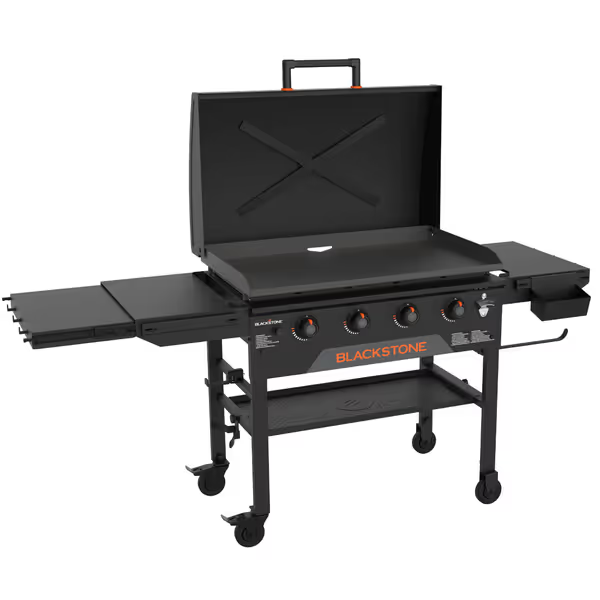
BLACKSTONE 2322 36" Griddle
Cook for crowds with superior heat and versatile flat-top performance.
$499
Cooking Surface768 sq. inches
Cooking Surface768 sq. inches
Pros
Omnivore Plate heats fast, uses less fuel, prevents warping.
Cooks 30 burgers; 4 independent zones for versatility.
Side shelves, tool hooks & bottle opener for prep efficiency.
Rear Grease Management for effortless cleanup.
Cons
Ignition button may be unreliable.
Customers find this griddle superior to regular gas grills, praising its professional-grade construction and ease of assembly compared to traditional models. The griddle is versatile, cooking everything from pancakes to large family meals, and customers appreciate its easy clean-up and good value for money. The functionality receives mixed reviews, with some customers reporting issues with the ignition button not working.
Customers find this griddle superior to regular gas grills, praising its professional-grade construction and ease of assembly compared to traditional models. The griddle is versatile, cooking everything from pancakes to large family meals, and customers appreciate its easy clean-up and good value for money. The functionality receives mixed reviews, with some customers reporting issues with the ignition button not working.
What stability features are required for health department approval on uneven surfaces?
Inspectors now routinely evaluate equipment stability as part of food safety assessments. Your food truck grill must:
- Maintain level cooking surface within 5 degrees on graded surfaces
- Feature non-slip feet that won't compress on soft terrain
- Have locking mechanisms that prevent accidental movement during operation
- Include sufficient weight distribution to resist tipping (tested with 15 lbs of force applied at cook surface height)
The Blackstone 36" Omnivore Griddle I recommended earlier meets these requirements with its four caster wheels (two locking), but I've seen it fail on beach sand without additional stabilization. For coastal operations, I advise adding a simple plywood base certified to food contact standards (something inspectors appreciate seeing as part of your operational plan).
Material Selection and Durability
How do I verify rust resistance in salt-air environments for my street food cooking equipment?
Coastal operations face unique corrosion challenges. For gear built to handle sand and salt, see our salt-resistant portable grills. Health departments in affected areas require:
- Minimum 304-grade stainless steel for all food-contact surfaces
- Powder-coated finishes (not painted) for structural components
- Regular documentation of maintenance for corrosion prevention
Recent studies by the Corrosion Control Institute confirm that marine-grade aluminum with anodized coating lasts 40% longer than standard stainless in salt environments. However, most health departments require stainless steel for food contact surfaces, a compromise you'll need to navigate with your local inspector.
Material durability directly impacts food safety. I've reviewed multiple inspection reports where surface pitting from corrosion created harborage points for bacteria. Your equipment must demonstrate structural integrity throughout its operational life.
Regulations and Compliance Documentation
What documentation should I carry when operating a pop-up restaurant grill?
Beyond your vendor permit, health inspectors expect these documents:
- Equipment manufacturer specifications showing compliance with NSF/ANSI 4 code
- Proof of grease disposal contract (required in most urban areas)
- Records of regular maintenance and cleaning
- Fuel safety data sheets (especially for propane systems)
- Local fire marshal approval for open flame devices
A recent regulatory change requires all mobile food operations to carry a written "contingency plan" for unexpected weather events. Review core portable grill safety rules to align your contingency plan with best practices. This includes how you'll safely shut down equipment during sudden wind events, a scenario that often catches new vendors off guard.
Remember that joyful outdoor cooking leaves no trace and meets the rules every time. The documentation isn't paperwork, it's your operational blueprint for consistent, compliant service.
How do fire bans affect my portable cooking operation?
Fire restrictions impact mobile food vendors more severely than recreational users. During Stage 1 fire bans, most jurisdictions:
- Permit only contained propane systems (no charcoal)
- Require spark arrestors on all venting
- Mandate 10-foot clearance from vegetation
- Prohibit operation during high wind events
I've developed this simple checklist for rangers (which they've shared with other vendors):
- Flame containment verified (no visible flame above cooking surface)
- Spark screen installed on all vents
- Fire extinguisher (minimum 5 lb ABC) within 10 feet
- Grease management system fully contained
- Weather assessment documented prior to operation
These requirements aren't obstacles, they're trust builders. When you can confidently explain your compliance measures, you build credibility with both officials and customers.
Product Recommendations for Health-Compliant Operations
After evaluating dozens of units against health code requirements, I consistently recommend systems that prioritize contained heat management and documented compliance. For large-scale operations, the Blackstone 36" Omnivore Griddle offers NSF-certified construction with its patented Rear Grease Management System that meets municipal grease containment requirements. Its Omnivore Technology ensures rapid heat recovery even during high-volume service, while the four independently heated zones allow you to maintain precise temperature control required by food safety regulations.
For smaller operations or those needing more flexibility, the DNKMOR Dining Cart Table provides essential support infrastructure. Its stainless steel construction meets food contact requirements, while the integrated storage solutions help maintain organization required during health inspections. The cart's stability features address common tipping violations, and its compatibility with various grill types gives you flexibility while maintaining compliance.
Final Compliance Checklist
Before your next service, verify these critical compliance points:
- Temperature Verification: Documented proof your unit maintains required cooking temperatures
- Grease Containment: Fully enclosed system preventing ground contact
- Material Safety: All food-contact surfaces certified to NSF standards
- Stability: Documentation showing unit remains stable on uneven surfaces
- Fire Mitigation: Required safety equipment and documentation on hand
- Fuel Compliance: Verification your fuel source is permitted under current restrictions
- Cleanup Protocol: Documented procedure for post-service sanitation
This comprehensive approach transforms regulatory compliance from a hurdle into a competitive advantage. When you operate with visible commitment to safety standards, customers recognize and reward that professionalism.
Further Exploration
Health regulations evolve constantly, particularly regarding fire restrictions and material safety standards. I recommend subscribing to your local health department's food service newsletter and joining the National Food Truck Association for up-to-date compliance guidance. For hands-on learning, many state health departments offer pre-inspection consultations specifically for mobile food vendors. These resources help you stay ahead of regulatory changes while building relationships with inspectors who appreciate your proactive approach.
Remember that your equipment choices reflect your commitment to both public health and environmental stewardship. When your portable travel grill meets every regulation while delivering exceptional food, you're not just running a business, you're building trust in every meal served.
Related Articles