Infrared vs Charcoal: Portable Grill Tested
By Priya Nayar • 23rd Mar
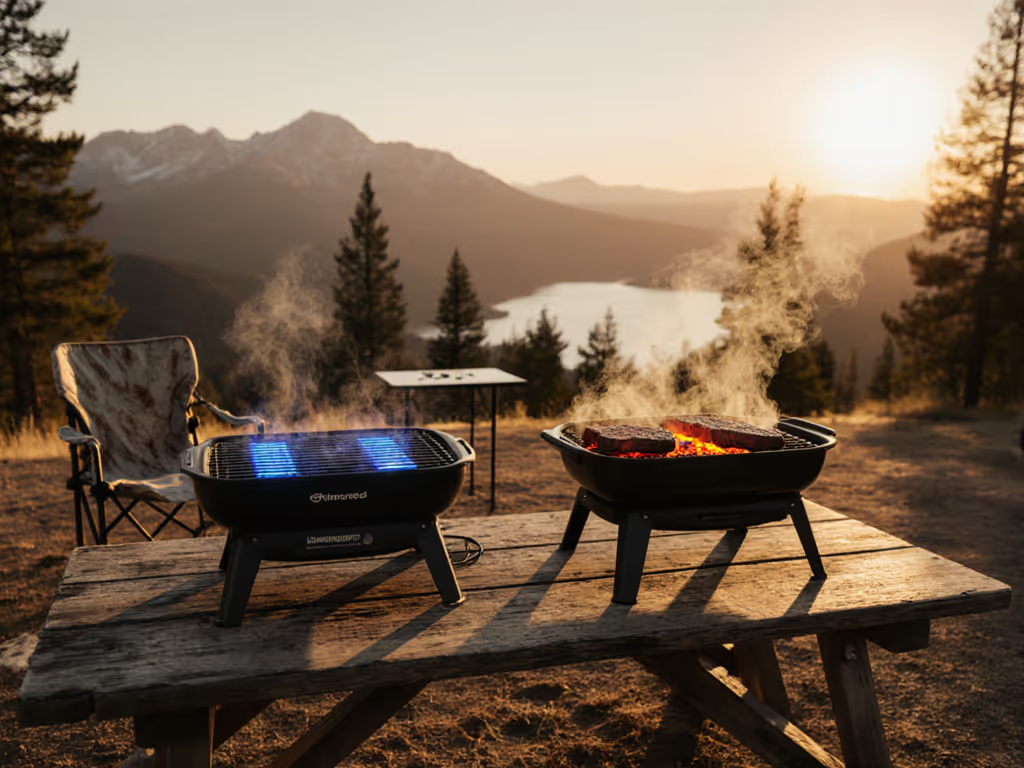
When you're choosing a portable travel grill and infrared vs charcoal options both catch your eye, the real question isn't which one looks fancier; it's which one will actually fuel your next meal on a beach, in a park, or from the back of a van without tangling your life in delays and cleanup. After thousands of miles and countless meals cooked in weather nobody plans for, I've learned that the best grill is the one you'll carry anywhere and fuel reliably when you get there.
This guide cuts past marketing speak and compares both technologies on the metrics that actually matter: real-world flame stability, fuel sourcing and cost, pack-away practicality, and how each performs under the conditions you'll actually face: wind, altitude, cold. You'll walk away with a plain-language breakdown and a system to choose confidently for your specific carry mode and food goals.
The Core Heat Physics: Why It Matters to You
Charcoal and infrared grills cook through fundamentally different mechanisms, and understanding this shapes everything about portability, reliability, and what you'll eat at the end of the day.
Charcoal: Radiant Heat and High-Intensity Sear
Charcoal grills produce high-intensity radiant heat by burning briquettes or lump charcoal, which emit infrared radiation that transfers heat directly to food and grates. The result is a signature smoky sear. What makes this relevant to your grab-and-go kit is that charcoal can reliably reach 600-700°F, giving you serious searing power for steaks, chops, or quick-char vegetables without fussy burner management.
When food drippings fall onto the hot coals, they vaporize and create smoke that rises back up and clings to your meat. You can add hickory or mesquite wood chips to coals for even more smoke depth, and the entire setup is mechanical: no ignition systems, no fuel regulators, just grates and hardware. Over a 10-year lifespan, that simplicity translates to fewer parts to replace and lower operational costs, even accounting for regular charcoal restocks.
Infrared: Speed, Precision, and Fuel Efficiency
Infrared grills don't produce heat through combustion. Instead, they use propane or natural gas to heat special elements (radiant glass panels, ceramic, or ceramic briquettes) that then emit infrared radiation. The key differences: infrared grills heat up in minutes, not 15-30 minutes, and they're more fuel-efficient than traditional gas burners because the direct radiation wastes less energy heating the surrounding air. For a deeper dive into how infrared cooking works on portable grills, read our science of infrared cooking.
Infrared cooking also retains up to 30% more moisture in your food compared to convection-based grills because the infrared process doesn't disturb the moisture barrier of meat. In plain terms: your burgers and salmon cook faster and stay juicier. Flare-ups are virtually eliminated because the intense heat vaporizes grease drippings instantly into flavor-enhancing smoke instead of letting them ignite on grates.
The trade-off: infrared grills cost significantly more, and they're typically larger and heavier, less ideal if your carry mode is a backpack or motorcycle pannier.
Pack-Away Reality: Weight, Shape, and Fuel Logistics
Portability isn't just about grill weight; it's about how the grill, fuel, and accessories fit into your actual life.
Charcoal Portability
Charcoal grills are often compact and modular, and many weigh under 15 pounds without fuel. A small ceramic or steel kettle-style charcoal grill fits easily into a trunk corner, a pannier, or an RV drawer. Charcoal fuel itself is light: a 10-pound bag costs $3-5 and fits under most car seats or in a dry bag. The mess is real, ash and residue stick to everything, but a sealed drip tray and brush take under 2 minutes to manage post-cook.
The challenge: charcoal is bulky relative to energy content. If you cook 4 times per week, you're restocking frequently, and some parks and fire-ban zones prohibit charcoal entirely.
Infrared Portability
Infrared grills are built around burner systems, so they tend to be heavier (20-40 pounds) and less compact than lightweight charcoal rigs. They require propane or natural gas, which means 1-pound disposable canisters or refillable cylinders. Propane is available almost everywhere (gas stations, hardware stores, grocery stores), making fuel access reliable in most urban and suburban contexts. A single 1-pound propane canister costs $3-6 and provides roughly 2-3 hours of cooking; a standard 20-pound cylinder costs $30-50 refilled and lasts weeks.
Carry the fuel you can buy twice in town. This principle alone eliminates half the stress from portable grilling.
Wind Resistance and Real-World Stability
One of the cruelest surprises for new portable grillers is how wind kills flame and tanks heat. Here's how each type holds up.
Charcoal in Wind
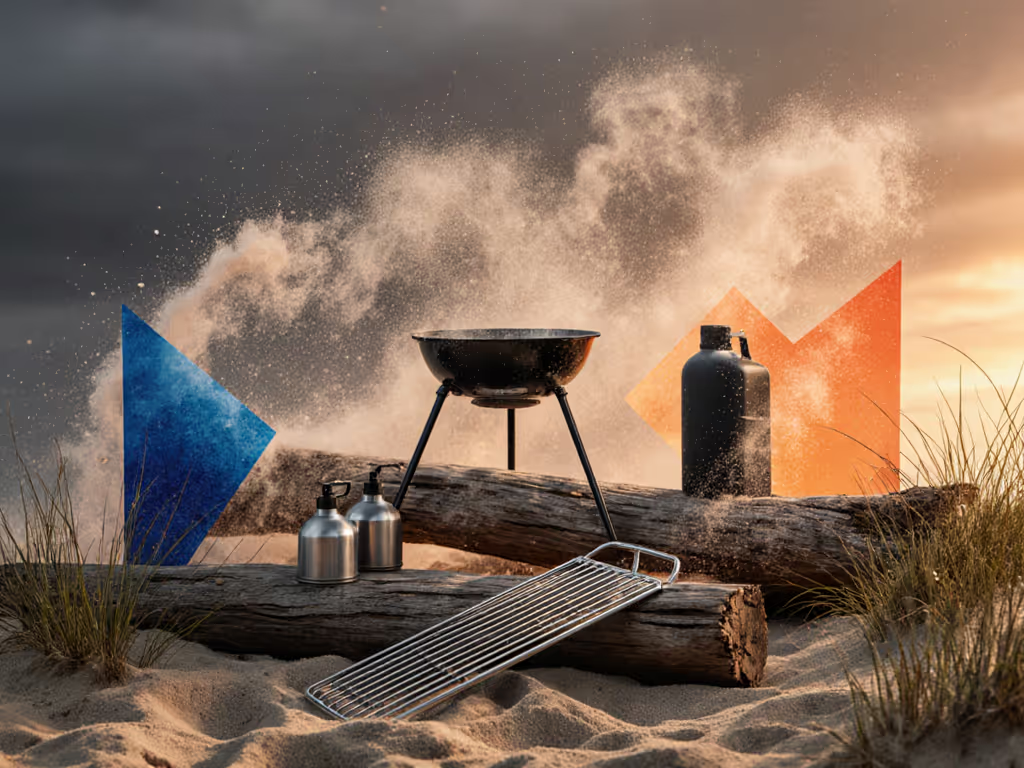
Charcoal's strength (open coals and radiant heat) becomes a liability in sustained wind. Gusts blow away heat, cool the coals, and scatter ash. Portable charcoal grills typically sit low and stable on legs, which helps, but a 15+ mph wind will noticeably slow cook times and force you to close vents (losing some airflow control that charcoal cooks depend on). A lightweight windscreen ($15-30, clips to the grill or sits downwind) largely solves this, but it adds another item to pack and deploy. Get proven setups in our windy-day grilling fixes.
Infrared in Wind
Infrared grills are more wind-resistant by design. The burners are enclosed, grates sit lower over the heat source, and the intense radiant energy isn't easily dispersed by air movement. Infrared systems virtually eliminate flare-ups, meaning wind that would trigger flames on a gas grill just gets absorbed. This is a genuine advantage if you cook regularly in windy contexts (beaches, high-altitude camps, coastal docks).
Trade-off: the enclosed design means infrared grills are bulkier and harder to shield further without blocking airflow.
Fuel Cost Math and Long-Term Practicality
Let's reduce this to the number that actually affects your wallet: cost per meal.
Charcoal Economics
A 10-pound bag of charcoal briquettes costs $4-6 and provides about 8-10 sessions of 1-hour cooking for 2-4 people. That's 50-75 cents per meal in fuel. If you grill twice weekly, you're spending $50-75 per year on charcoal alone. The grill itself lasts 5-10 years with basic care (no moving parts to fail), so total ownership is low.
Charcoal's hidden cost is storage and mess: ash needs disposal, bags take up space, and charcoal dust ends up in your car. If you live in an apartment or van, this friction compounds over time.
Infrared (Gas) Economics
A 1-pound propane canister ($4-6) provides 2-3 hours of cooking on a mid-size infrared grill. That's $2-3 per meal, roughly 3-4 times charcoal's cost. A refillable 20-pound cylinder ($50 refilled) lasts 40-50 hours, roughly $1-1.50 per meal if you buy refills rather than disposables.
For heavy users, refillable propane is genuinely cheaper long-term. For occasional cooks or van lifers with limited storage, disposable canister costs climb fast. Gas grills have burners and ignition systems that fail, averaging 7-10 years of reliable use before repairs kick in. For side-by-side fuel costs and runtime math, see our portable grill fuel economy guide.
Heat Range, Cooking Versatility, and Actual Capacity
Both technologies excel at different tasks. Here's where they diverge in the field.
Charcoal Versatility
Charcoal grills excel at dual-zone cooking: push coals to one side for searing, leave the other side coal-free for gentle indirect heat or smoke-roasting. This single setup lets you sear a thick steak on direct heat while keeping sides warm on indirect. Charcoal also has no upper temperature limit: push coals together, add a vent to accelerate airflow, and hit 700°F+ for extreme searing.
The learning curve is real: managing airflow and coal arrangement takes practice. Beginners often over- or under-fire meals. But for those willing to invest 5-10 cookouts in technique, charcoal offers unmatched flexibility in a lightweight package.
Infrared Heat Precision
Infrared grills preheat to target temps rapidly (often in 5-10 minutes) and hold them steady without constant adjustment. If you want a consistent 400°F for 20 minutes to roast vegetables evenly, infrared delivers predictability. Many models reach 900°F at the high end, rivaling charcoal for searing.
Infrared is less versatile for low-and-slow smoking, the intense radiant heat suits high-temp cooking. Dual-zone is possible (some models partition zones) but less intuitive than charcoal.
Real Capacity
A small portable charcoal grill typically handles 4-6 burgers or 2-3 steaks per batch. A mid-size infrared portable grill (the ones weighing 25-35 pounds) usually fits 6-8 burgers or 4-5 steaks. If you're cooking for 2-4 people and prioritize portability, both work. If you're feeding 6+ regularly or want minimal batching, infrared's extra surface area matters.
Regulatory Reality: Where Each Grill Is Legal
Before you invest, check the rules at your specific cook sites.
Charcoal is outright banned in many urban parks, state forests with high fire-risk ratings, and some rental properties (balconies, decks). On beaches and in backcountry camps, charcoal is often allowed but sometimes requires a fire permit.
Propane and natural gas grills face fewer blanket bans because they produce less uncontrolled flame and heat, but some densely populated parks restrict them too. Always verify with your local parks department or property manager before buying. The frustration of owning a grill you can't legally use is real; I've seen it force people into regrettable secondhand sales.
Practical Breakdown: Which Grill for Which Scenario
Here's a plain-language checklist:
Choose charcoal if you:
- Camp or cook off-grid (charcoal is easier to source in remote areas)
- Prioritize light weight and compact pack-away (under 12 pounds)
- Cook 1-2 times per month (fuel bulk doesn't become a nuisance)
- Want the lowest up-front cost ($40-120 for a decent grill)
- Are comfortable managing airflow and temperature through technique
- Have access to parks or sites where charcoal is explicitly allowed
- Crave deep smoky flavor and don't mind the learning curve If that sounds like you, compare top performers in our portable charcoal grill face-off.
Choose infrared if you:
- Cook in windy or exposed contexts regularly (beaches, high elevation, coastal docks)
- Value fast preheat and hands-off temperature control
- Have secure vehicle storage (car trunk, RV bay) for a 25-40 lb rig
- Cook 2+ times per week (refillable propane becomes cost-effective)
- Want reliability over technique, flame every time, no airflow management
- Grill mostly high-temp dishes (steaks, sears, seafood, burgers)
- Prioritize moisture retention and rapid cooking
)
Building Your Grab-and-Go Kit
The grill itself is just one piece. To avoid the friction that kills portability, you need a system.
For Charcoal
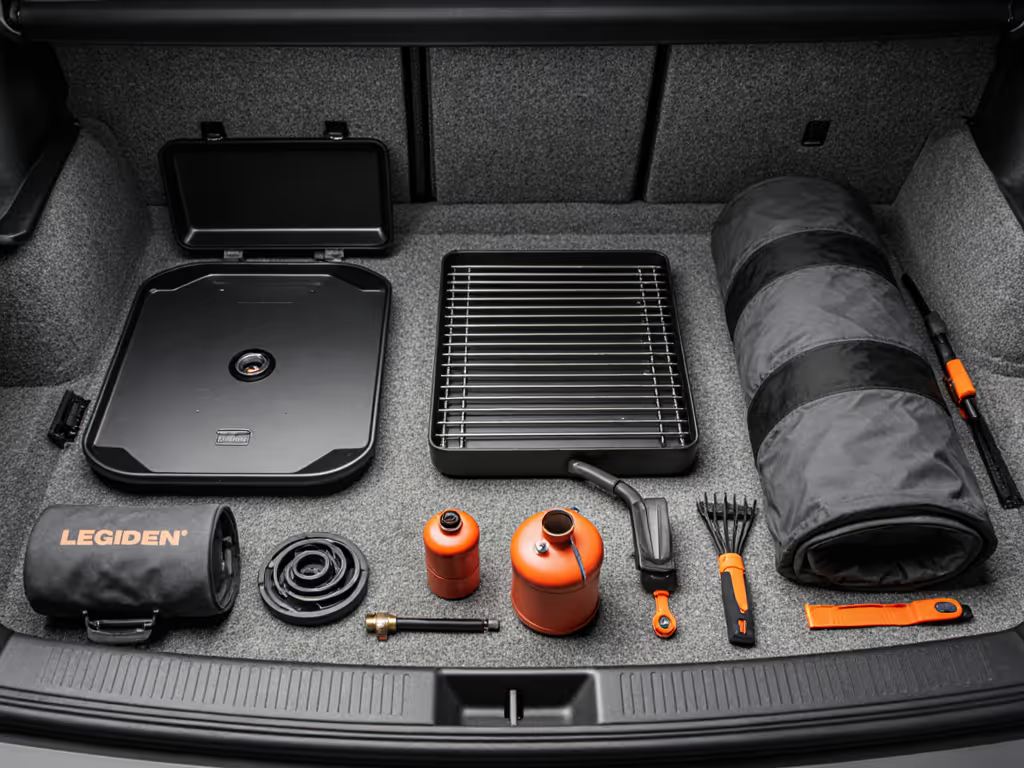
Core kit: grill, 10-pound charcoal bag, lighter/matches, ash brush/shovel, metal drip tray, 2-3 cooking utensils, light windscreen. Round out your setup with the essential portable grill tools we actually use on the road.
Cost-per-meal math: $70 grill + $5 charcoal + minimal accessories = roughly $75-90 total investment. Fuel cost per 4-person meal: $0.75.
Pack strategy: Charcoal in a dry bag, grill wrapped in an old towel to contain ash dust, utensils in a zippered pouch. Everything fits a milk crate or single backpack compartment.
For Infrared
Core kit: infrared grill, 1 spare 1-pound propane canister (or access to refills), regulator/hose (if needed), cleaning brush, heat-safe gloves, light aluminum case or bag.
Cost-per-meal math: $150-300 grill + $5 propane + case = $200-350 invested. Fuel cost per 4-person meal: $2-3.
Pack strategy: Grill in a padded case (essential for protecting the burner system), propane canister in a well-ventilated bag or vehicle storage, utensils in the grill's side shelf (if fitted).
The Verdict: Practicality Over Hype
Neither grill is objectively "better"; they solve different problems. Charcoal rewards patience and technique with flavor and low ongoing cost, thriving in lightweight, off-grid contexts. Infrared trades upfront expense and weight for predictability, wind resilience, and speed, excelling for frequent cooks who prioritize consistency.
Your real choice hinges on three questions:
- How often do you cook? Weekly users justify infrared's fuel cost; monthly cooks stick with charcoal.
- Where do you cook? Windy or exposed sites favor infrared; calm backcountry or parks favor charcoal.
- What's your carry mode? Backpack or pannier? Charcoal. Car trunk or RV? Either works; choose by habit and fuel access.
Next Steps: Your Decision Framework
Before buying, spend 30 minutes on these actions:
- Check your cook sites' rules. Search "[your park] charcoal policy" and "[your park] gas grill rules." Eliminate banned options immediately.
- Map fuel access near your frequent cook locations. Can you buy propane or charcoal within 5 miles? Fuel access beats cheaper fuel far away.
- Calculate your annual meal count. If you grill 50+ times per year, run the refillable propane numbers; you'll likely save money long-term despite infrared's higher up-front cost.
- Test both, if possible. Borrow or demo a charcoal and infrared grill at a friend's place. The tactile difference in setup speed and airflow control is stark and worth experiencing.
- Build your kit incrementally. Buy the grill first. Use it 3-5 times, then add a windscreen or fuel backup based on real friction you encounter.
The best grill isn't the one with the highest BTU rating or the shiniest reviews; it's the one you'll confidently carry to your favorite cook site, fuel with something you can actually buy nearby, and pack away without regret. Start there, and everything else follows.
Related Articles