Portable Travel Grills: Off-Grid Power Tested
By Priya Nayar • 3rd Mar
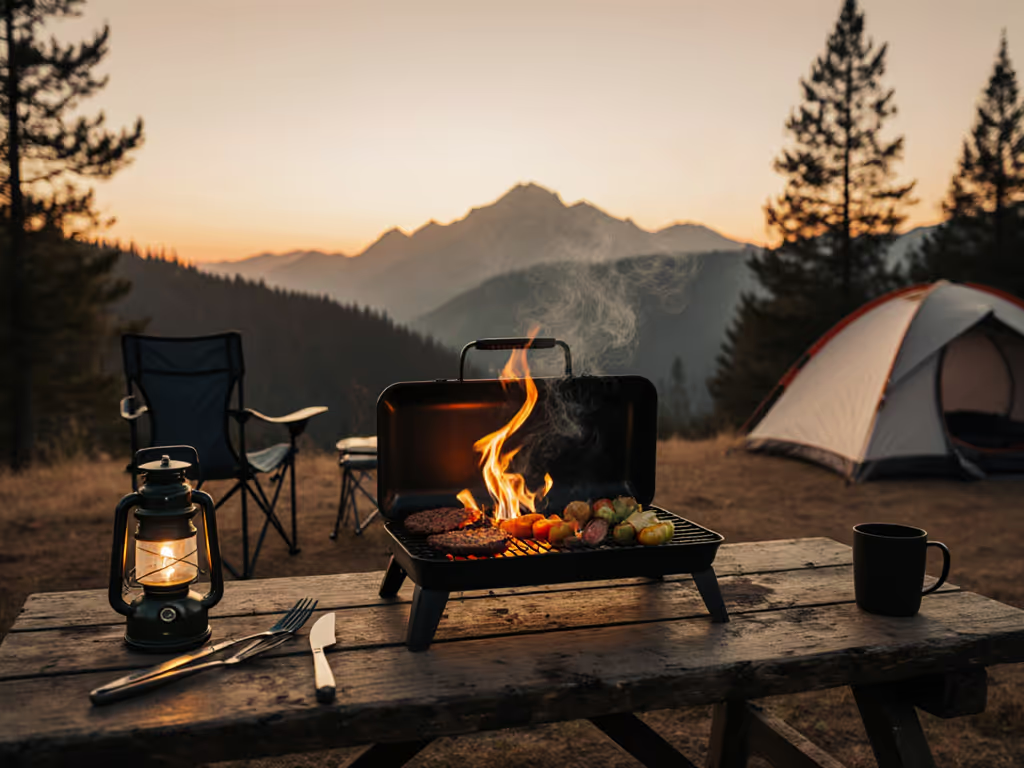
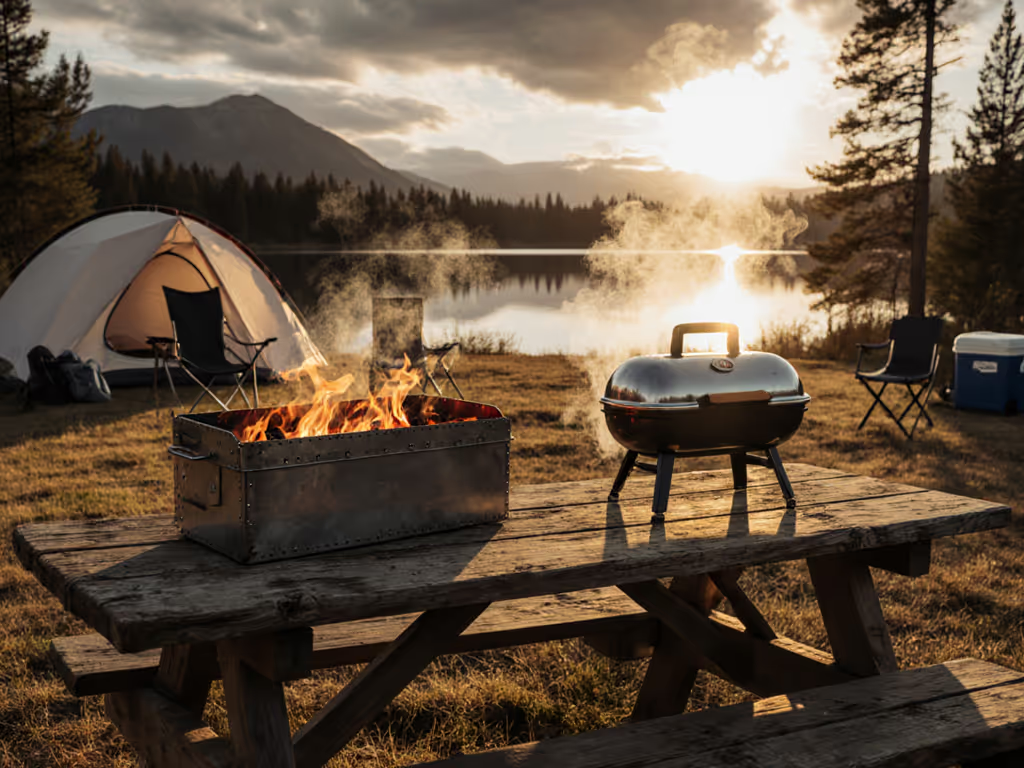
The portable travel grill you choose shapes whether you cook with confidence or scramble at trailheads, tailgates, and beaches. What separates a grab-and-go kit from a frustrating paperweight is how well it balances ignition reliability, heat stability in wind, fuel availability, and (critically) whether it actually fits back in your car or pack after cooking. Off-grid cooking power isn't about raw BTUs on a spec sheet; it's about predictable flame-on in 10 mph gusts, clean pack-away that doesn't leave soot on your clothes, and knowing you can source fuel in any town within 50 miles.
I've packed folding grills into backpacks for weekend parks, strapped compact burners to motorcycle panniers, and crammed stove-grill combos into RV drawers. The difference between gear that stays in rotation and gear that rusts in the garage comes down to systems thinking: Does every component nest cleanly? Is the fuel type available where you travel? Can you ignite it reliably with cold fingers? This guide compares the leading portable travel grill approaches: charcoal, propane, pellet, and multi-fuel, through the lens of real-world tradeoffs in packability, setup speed, heat consistency, and total cost of ownership. If you're new to these categories, start with our portable grill types overview for pros, cons, and best use cases.
The Core Challenge: Portability vs. Power
Portable grills live at an uncomfortable junction. You want expansive cooking surface and impressive output power, yet you also need the whole system to weigh under 20 pounds and fit within a footprint you can carry or stash. The Coleman Deluxe Camp Grill and Vargo Titanium Bifold Grill represent opposite ends of this spectrum. The Coleman delivers taller legs and easier heat management for groups of four or more but packs less compactly. The Vargo drops weight dramatically (ideal for backpacking), but requires finesse to establish a stable grilling surface and handles delicate tasks better than hard sears.
Rather than declare a universal winner, think modular kit mindset: your rig should scale to your trip. A weekend beach tailgate doesn't need the same footprint as a multi-day hike. A city dweller with park access and car storage has different constraints than a van nomad. The best portable travel grill for you is the one you will actually fuel and carry anywhere, not the one collecting dust because setup frustrates you or pack weight exceeds your tolerance.
Propane Systems: Reliability and Widespread Fuel
Propane dominates portable travel grill options because one thing holds true everywhere: you can buy a 1-pound canister from a gas station, grocery store, or hardware shop in nearly any town. The Weber Traveler gas grill exemplifies this strength. It folds with two wheels for maneuverability across sand and grass, takes less than 10 minutes to break down and set up, and delivers 660°F searing temperatures for steaks or pizza. With a 360-square-inch cooking area and one-handed ignition, it suits casual backyard use, camping, and tailgating without the compromise most portable units demand.
For tighter budgets or smaller groups, the Cuisinart CGG-306 offers tabletop value but lacks wheels and a stand, forcing you to source a cart or table. Coleman's portable propane line hits the mid-range with two burners (11,000 BTUs total), 225 square inches of cook space, and field-proven heat consistency reaching 650°F. The trade is weight and packed size. These aren't minimalist rigs.
Propane shines where:
- Fuel is universally available and inexpensive ($5-8 per pound).
- Ignition is reliable; most models include piezo igniters plus manual lighter backup.
- Setup takes under five minutes; no match-striking or charcoal prep.
- Heat scales instantly by turning a dial; no learning curve for temperature management.
- Flame stays lit in moderate wind with basic windscreen practices.
Propane falters when:
- Cold temperatures below 20°F significantly reduce canister pressure and BTU output.
- Tanks are heavy relative to cooking surface; a 20-pound propane tank yields much less mobility than equivalent butane.
- Regulators and adapters vary; incompatible tank fittings create frustration mid-trip (a lesson learned one late-night train ride when the station vendor was out of butane and a simple adapter was my lifeline).
Carry the fuel you can buy twice in town.
This means propane for most travelers: it's standardized, abundant, and cheap enough to replace without guilt. If you travel across borders or switch canister standards, see our fuel adapters & regulations to avoid compatibility headaches.
Charcoal: Simplicity and Flavor
Charcoal grills appeal to two audiences: minimalists who strip all electronics and purists chasing smoke flavor. The GSI Guidecast Griddle is cast iron with two easy handles (no legs, no moving parts) and excels at camp-kitchen tasks where you're already managing a fire ring or established base camp. It heats slowly but holds temperature excellently once ready, and the cast iron adds a flavor layer no gas unit matches. However, weight is noticeable compared to other portable options, and packing requires protection against rust and grinding against other gear.
Charcoal grills present logistics challenges for grab-and-go travel:
- Charcoal is banned in many parks and fire-ban zones.
- You must carry charcoal (heavy and bulky), source it locally (not always available), or go without.
- Ash management is messy; you need a sealed container or scoop method to avoid car/pack residue.
- Setup requires 15-20 minutes; you can't ignite and cook in under 10 minutes like propane.
- Cleanup involves cooling time before packing; residual heat lingers and ash seeps into compartments.
For car-based camping with established sites and no fire restrictions, charcoal excels. For spontaneous park cookouts or RV travel, it's friction. If you've settled on briquettes, see our best portable charcoal grills comparison for performance, packability, and value.
Pellet Grills: Features at the Cost of Complexity
The Traeger Tailgater 20 and Camp Chef Rainier 2X represent premium compact options that blur the line between grill, smoker, and stove. Pellet grills offer superior temperature control, the ability to low-and-slow smoke for hours, and optional griddle surfaces. The Traeger Tailgater is lightweight and easy to maneuver; the Camp Chef Rainier is the heaviest tested unit (16 pounds) but includes a carrying case and a stove top that handles full pots of boiling water.
The tradeoff is electricity: pellet grills require a 120V connection or battery to run their augers and controllers. For true off-grid cooks, compare power-generating grills to keep controllers and devices charged. While a 20-pound Traeger may work on a truck bed with easy power access, it's not truly off-grid. Temperature and pellet hopper need monitoring, and thorough cleaning after each use is non-negotiable. Pellet sourcing is convenient in the U.S. but sparse in remote areas or abroad.
Choose pellet if:
- You're stationary for days (camping, RV life, tailgating from the same spot).
- You value precise temperature hold for smoking or low-heat meals.
- You have reliable electricity access (truck bed outlet, RV hookup, campground pedestal).
- Budget is less constrained and storage space is adequate.
Skip pellet if:
- You prioritize true portability and one-off site visits.
- You travel internationally or to areas with limited pellet supply.
- Pack-light ethos is non-negotiable; 16+ pounds plus fuel and case become awkward fast.
Ultra-Compact Options: The Packability Sweet Spot
The UCO Grilliput Portable Grill earns "Best Packed Size" precisely because it compresses to a thin cylindrical tube. Despite fiddly assembly (a legitimate con), it's surprisingly stable with room for coals underneath and one of the most reliable structures in field tests. This is the grill you throw in a backpack compartment or lash to bike panniers because it weighs little and takes minimal real estate.
The WeberQ 2200, with its picnic-basket design and hidden propane compartment, similarly leverages compactness without sacrificing a cast-iron grate and a 9,000 BTU burner reaching searing temperatures even for delicate fish. The Weber Go Anywhere Gas Grill is the budget-friendly ultralight, offering 160 square inches of cook space and 600°F heat from a 6,500 BTU burner; it's lightweight but requires external tank mounting and zero creature comforts.
Ultra-compact grills solve the mobility problem but demand discipline:
- You'll cook for 2-4 people per batch, not crowds.
- Assembly or securing takes time; "under 2 minutes" is optimistic unless you practice.
- Cooking surfaces are tight; long steaks or whole fish require positioning care.
- Legs may be stubby; sand, grass, and uneven ground test their stability.
They're ideal for city park weekenders, motorcycle travelers, and anyone for whom bulk creates genuine friction, not just preference.
Fuel Economics and Availability
Compare portable travel grill economics not by BTU alone but by cost-per-meal math: What does it cost to sear steaks for four, and can you source that fuel within 10 minutes of your destination?
Propane: $5-8 per pound; 1-pound canisters universally available. A 1-pound canister yields roughly 4-6 hours of intermittent grilling (longer if you're simmering vs. searing). Cost per meal: $1-2.
Butane: $3-6 per canister; availability drops sharply in cold climates and rural areas. Cold-weather performance is poor below 32°F. Cost per meal: $0.75-1.50 (if you can find it).
Charcoal: $4-10 per bag (10 pounds); most bags yield 2-3 grilling sessions. Cost per meal: $1.50-5. Add logistics: sourcing, transport, ash disposal.
Pellets: $10-20 per 20-pound bag; rarely available outside the U.S. Cost per meal: $2-4 (assuming efficiency).
Propane wins on availability and consistency. Butane is cheaper but riskier if you can't source it mid-trip. Charcoal is economical at home but logistically messy while traveling. Pellets are economical per meal but require infrastructure.
Wind Resilience and Real-World Performance
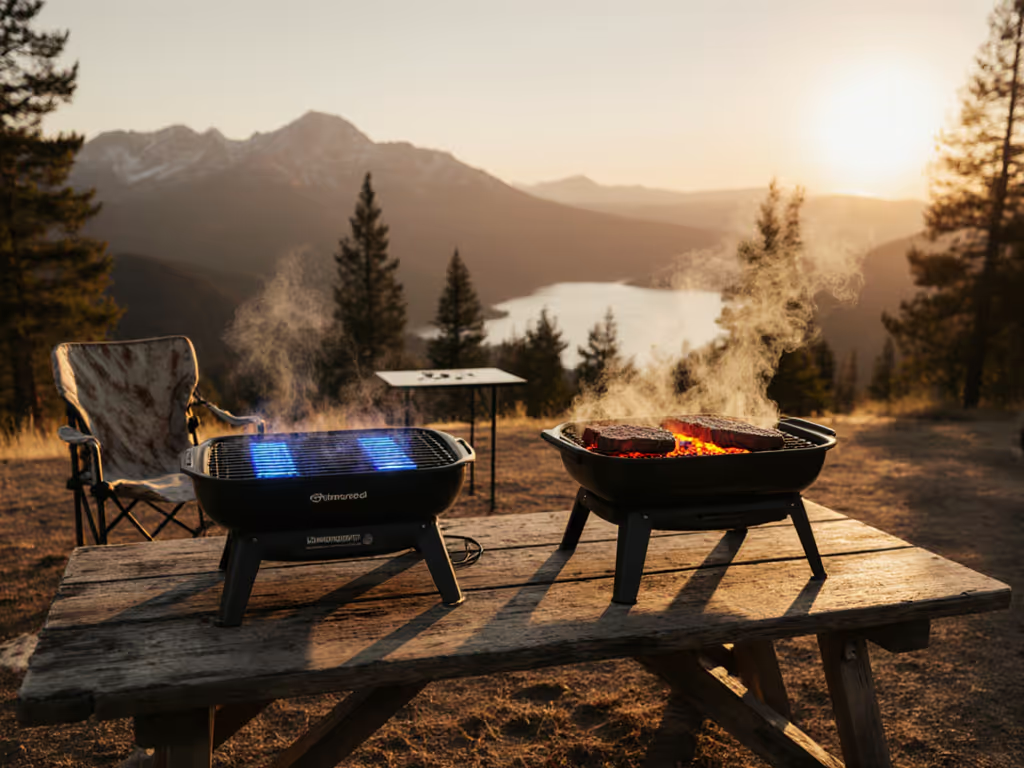
Marketing specs promise heat output; field tests reveal whether that flame survives 15 mph gusts. The Weber Traveler and Coleman Deluxe both showed wind resilience in tested conditions, though neither is immune to flame blowout in sustained 20 mph+ wind. The Camp Chef Rainier, with its heavy-duty stove top and griddle design, proved consistent even in gusty conditions, a nod to its weight and stability.
For any portable grill, a simple windscreen (plywood, aluminum foil, or commercial shields) is non-negotiable if you cook coastal or open-field locations. Budget 10-15 minutes to assemble and position it. Accept that absolute flame control in true gale conditions requires a three-sided enclosure; you're not fighting physics, you're working with it.
Building Your Modular Kit
Stop thinking of "the best portable grill" as a single product. Think of it as a system: the grill body, the fuel type, the case or storage method, the cleaning kit, and any accessory add-ons (windscreen, grill mat, thermometer). This modular kit mindset aligns gear to your actual lifestyle.
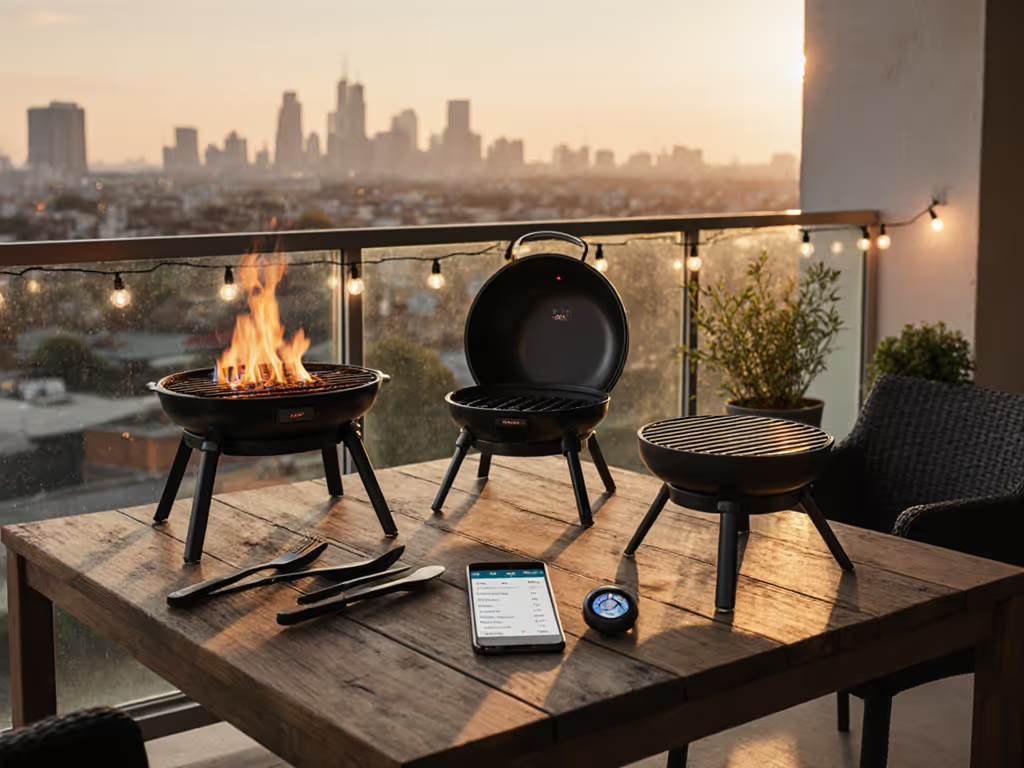
For urban park weekenders (2-4 people, car access): WeberQ 2200 or Cuisinart CGG-306 + 1-2 spare 1-pound propane tanks + collapsible wind shield + sealed drip tray. Packed weight: 12-16 pounds. Setup time: 5 minutes. Cost per meal: $1.50-2.
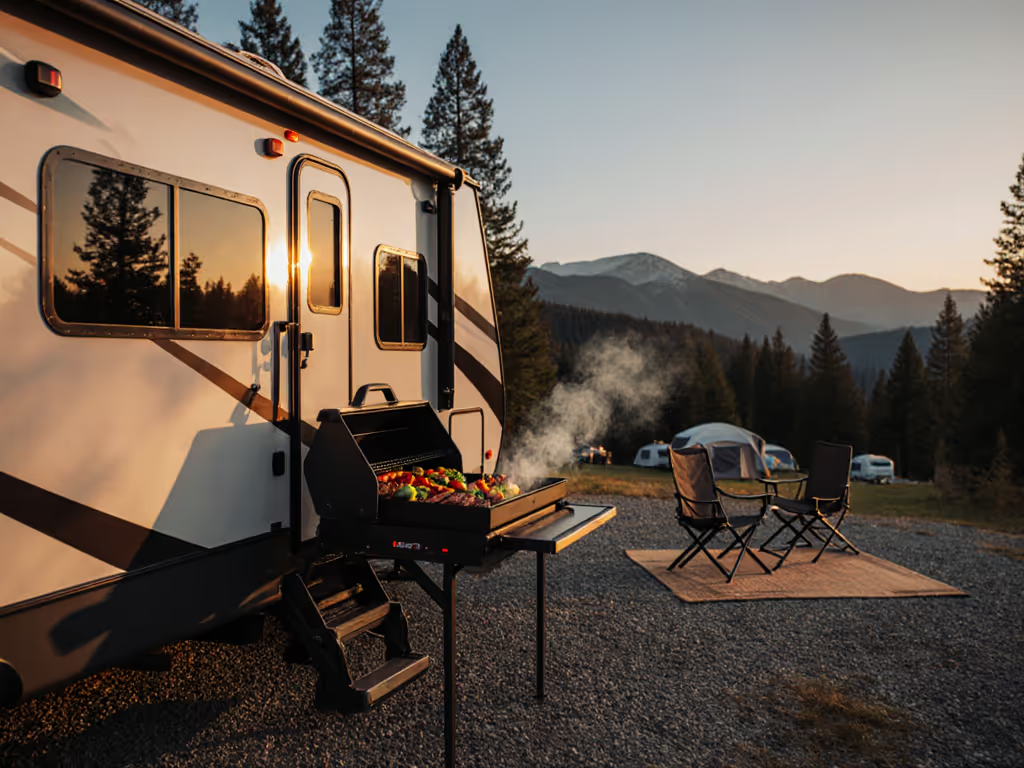
For RV and tailgate travelers (4-8 people, stationary sites): Traeger Tailgater 20 or Camp Chef Rainier 2X + pellet bag + power source (truck outlet or battery) + griddle if desired. Packed weight: 20-25 pounds plus fuel. Setup time: 10 minutes. Cost per meal: $2-3.
For backpackers and minimalists (<5 lbs, no car): UCO Grilliput or Vargo Titanium Bifold + small charcoal bag (or single butane canister for alpine zones where charcoal is banned) + compact grill mat. Packed weight: 3-5 pounds. Setup time: 10-15 minutes (assembly + fuel prep). Cost per meal: $1-2 (charcoal) or $0.75-1 (butane).
Maintenance and Durability
Rust and corrosion are the silent killers of portable gear, especially near salt water. Cast-iron surfaces rust if not dried immediately; cheap steel legs warp after a season of sand exposure. The Vargo Titanium Bifold sidesteps this by using titanium, but the price jumps significantly. For budget-conscious travelers, a simple post-cook routine is non-negotiable: wipe and dry the grill surface, let legs air-dry in your tent or car, and store in a breathable bag (not sealed plastic, which traps moisture).
Inspect hinges, joints, and screws every few trips. Tighten them before they rattle loose. If you grill in saltwater environments, rinse the entire unit with fresh water after each session and consider a protective spray or oil coating. A $20 cooler bag dedicated to storing your grill kit keeps it separate from food and reduces mess transfer to your living space, a small investment that extends gear life and keeps your car or pack clean.
Actionable Next Steps
Define your primary use case: Which trips will you actually take in the next six months? City parks, weekend campouts, van life, beach tailgates, or a mix? Weight and packability constraints follow from that honest answer.
Next, audit fuel availability in your region and typical destinations. If you travel primarily within the U.S., propane is your default; butane is a backup if you're in urban zones. If you're overseas or high-altitude frequently, reassess.
Third, test a compact grill model at home before depending on it at a site. Assembly, ignition reliability, and heat feel different in your driveway than in a park under time pressure. Spend $40 on practice so you avoid frustration when others are hungry.
Finally, invest in a simple carrying case or sealed bag, a compact windscreen, and a dry-brush or cloth for post-cook cleanup. These three items transform a portable travel grill from a headache into a reliable system. The best grill is the one you'll actually carry and fuel anywhere, which means picking one that fits your pack, your budget, and your tolerance for setup friction, then pairing it with a repeatable kit. That discipline turns spontaneity into confidence.
Related Articles