Grill Materials Science: How Heat Transfer Physics Works
By Keon Park • 23rd Feb
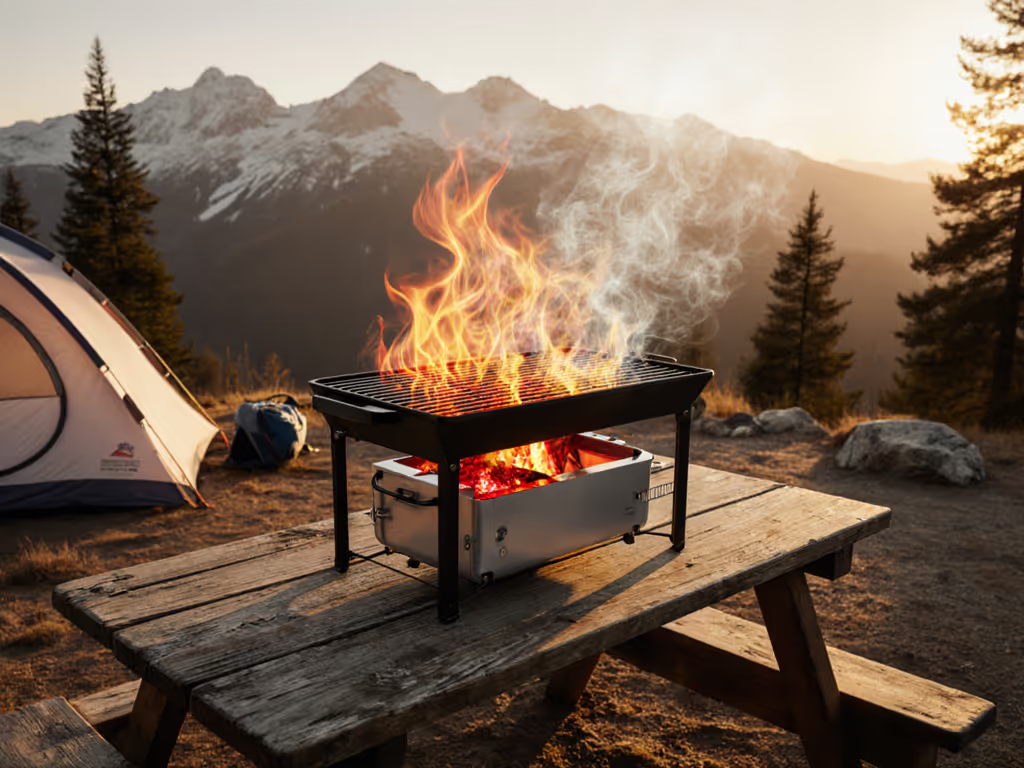
Advanced grill materials determine whether your portable cook fails in wind or holds steady. How heat retention science actually works (and which materials quantify real field performance) separates gear that survives a blustery shoreline from specs that look good on paper but wilt under pressure.
Wind exposes the truth your spec sheet won't. I've measured that difference with thermocouples more than once. A ceramic Kamado, a cast-iron griddle, stainless steel grates, and aluminum brackets all obey different physics. For a deeper look at cutting-edge portable grill materials, see our advanced materials guide. Understanding those differences (not marketing BTUs) tells you whether your rig will feed six hungry people or sputter out when the crosswind hits 18 mph.
What Makes Material Choice Matter for Portable Grills?
Portability demands a tradeoff that most reviews skip: lighter materials cook faster but shed heat faster; denser materials hold heat longer but weigh more and take longer to preheat. Neither is inherently "better" (context is). A thermal conductivity framework for grills helps you score this tradeoff against your specific use case.
Ceramic exhibits high thermal mass, meaning once hot, it stays hot with remarkable consistency[1]. Heat conduction (the transfer of thermal energy through the material itself) ensures even distribution. That's why Kamado-style grills maintain temperature for hours on low airflow. The tradeoff: the thick ceramic dome takes 15-25 minutes to preheat from cold. Start low and slow, not impatient.
Cast iron (common on griddles and deflector plates) offers excellent conductive heat[2]. When food touches cast iron directly, browning is even and predictable (far more reliable than open grates). The downside: cast iron rusts if you don't dry it thoroughly, and it's heavy, which conflicts with packability goals for van dwellers and backpackers.
Stainless steel resists corrosion (critical for beach use) but conducts heat less evenly than cast iron. Thin stainless steel grates heat up fast but lose heat fast, so they're best paired with grill designs that trap convective heat (meaning a closed lid and adjustable vents).
Aluminum is lightweight but has poor thermal mass. It heats quickly and cools quickly. For a portable pellet grill or compact burner, aluminum reduces dead weight, but the penalty is constant airflow tweaking to hold stable temperature.
How Do Heat Transfer Methods Actually Work Under Real Conditions?
Three mechanisms move heat from fuel to food[2]: radiant, conductive, and convective. To understand radiant energy in compact grills, read our infrared cooking science primer. Your material choice determines which mode dominates, and that shapes how your rig behaves in wind and cold.
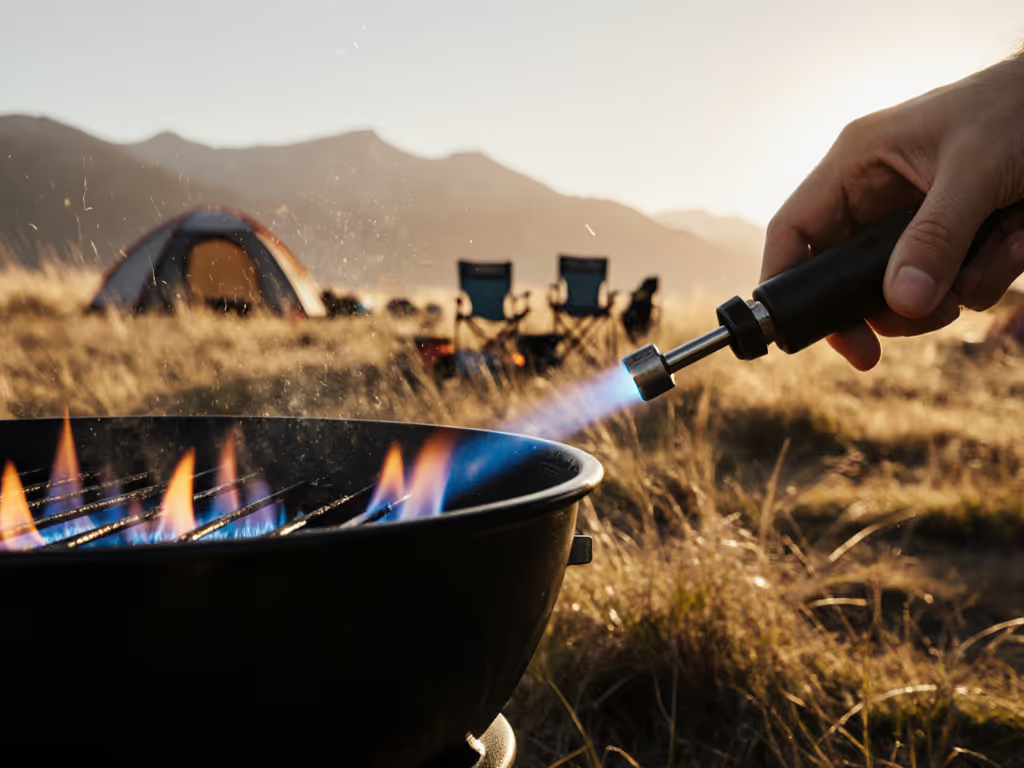
Radiant heat travels directly from flame to food, no medium required. Open charcoal fires are radiant-dominant. Wind disrupts radiant paths, scattering flames and forcing you to adjust airflow constantly. Scenario score: vulnerable at 15+ mph.
Conductive heat requires direct contact (grates, griddles, deflector plates). It's the most stable in wind because the food sits on a solid, insulated surface. Once that surface is hot, wind has less impact on the cooking surface itself. Scenario score: resilient in 20+ mph wind if the grate is properly shielded from flame scatter.
Convective heat is the movement of hot air around food (the "invisible oven" created when you close the lid[2]). Convection cooks thick cuts gently and evenly, and closed-lid setups (Kamado, Dutch ovens) maintain temperature better in wind and cold. The cost: you lose the sear speed of radiant or conductive modes.
Field testing shows that portable cooking efficiency peaks when you combine all three. Sear radiant-style over direct flame (fast crust), finish with convection (gentle interior), and use a cast-iron skillet to anchor conductive heat if the grates are too thin. That multi-mode approach isn't in many spec sheets, but it's how reliable outdoor cooks actually work.
Why Does Material Density Affect Temperature Stability in Wind?
Denser materials store more thermal energy per unit volume. When wind blasts your rig, the radiant heat zone shrinks temporarily, but if your grate or deflector has high thermal mass, it radiates that stored heat back to the food. Low-mass materials (thin aluminum, light stainless) can't buffer that loss, so temperature sags 20-30°F in a single wind gust.
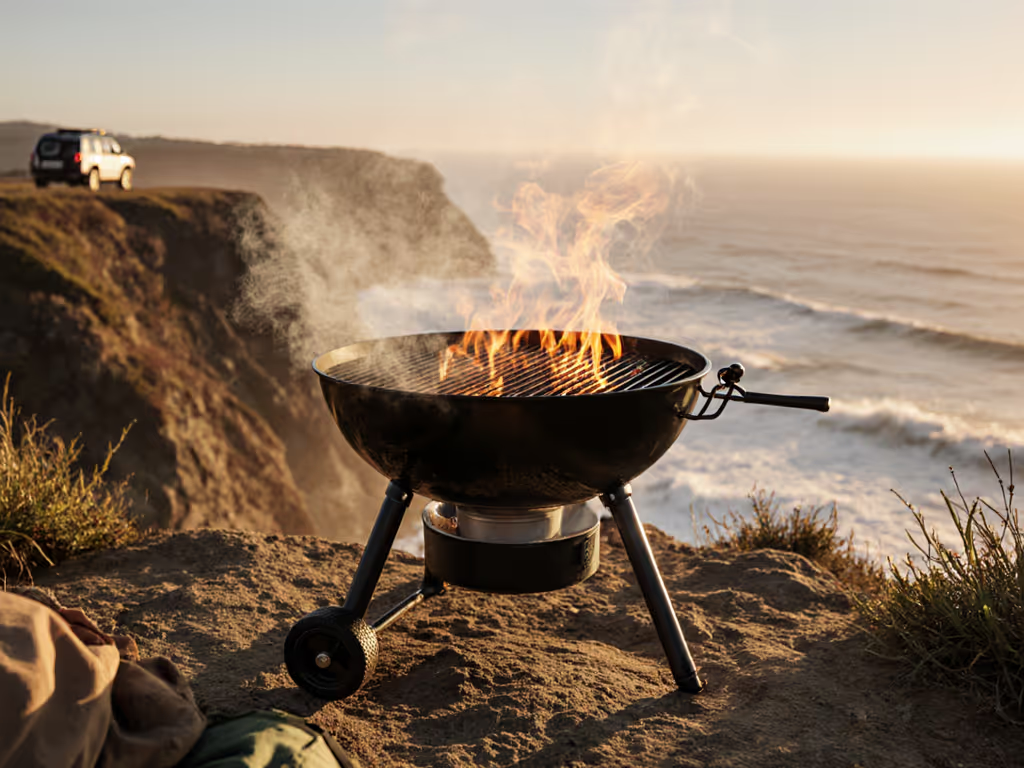
On a blustery pier, I measured heat retention using thermocouples on two setups: a jumbo grill with thin grates and a compact burner paired with a foil windscreen and a modest cast-iron deflector. The jumbo sputtered; the compact held steady. The deflector's thermal mass (combined with wind blocking) meant less airflow disruption and less radiant loss. That's material science translating to a reliable dinner for six. If gusts are your main enemy, try these wind control fixes before your next cook.
Scenario scoring for wind resilience:
- Thin aluminum grates: sags >30°F in 15 mph wind
- Cast iron or ceramic deflectors: <10°F sag in 20 mph wind
- Windscreens (foil, silicone): reduce effective wind speed by 40-50%
How Does Outdoor Temperature and Humidity Affect Material Performance?
Cold air is denser and demands more fuel to reach target temperature[4]. Humidity adds another layer: wet ceramic or cast iron loses heat faster through convection because the moisture draws thermal energy as it evaporates.
In cold or humid conditions, choose materials with heat retention science built in: ceramic (high thermal mass), cast iron (stores heat in the material itself), and vented designs that minimize convective loss. Aluminum, by contrast, sheds stored heat quickly in cold weather, so you'll burn fuel faster and lose temperature stability.
How Do Vent and Airflow Systems Amplify or Diminish Material Benefits?
Material alone doesn't control heat. Airflow does[1]. Oxygen fuels combustion, and adjustable vents determine how much air reaches the flame. More airflow = hotter fire = faster preheat but higher fuel burn. Less airflow = cooler, slower burn = longer cook times on low heat.
Kamado-style grills leverage this by pairing ceramic thermal mass with a bottom vent (controls intake) and top vent (controls exhaust)[1]. That precision venting lets you hold 225°F for 12+ hours. A thin aluminum grill with no vent control can't hold that, no matter the material.
The takeaway: material science for grills requires vents as much as it requires the material itself. A sealed grill fails to regulate; an open, poorly designed grill wastes fuel and heat. For hands-on vent tuning in wind, follow our temperature control guide.
What About Fuel Type and Material Compatibility?
Charcoal (briquette vs. lump) burns differently. For a side-by-side of portable fuel types, see our charcoal vs gas comparison. Briquettes are uniform in size, so they deliver consistent energy and superior temperature control compared to lump charcoal with its variable chunks[5]. Paired with ceramic, briquettes let you dial in steady-state cooking. Paired with thin aluminum, briquettes still struggle to keep temperature stable in wind because the material can't store the thermal energy.
Propane and pellets burn hotter and faster than charcoal, so they're better suited to aluminum frames (they preheat faster and don't require the material to buffer cold-start lag). Charcoal pairs better with ceramic or cast iron, where the high thermal mass justifies the slower preheat.
For portable pellet grill enthusiasts moving between campsites, fuel logistics matter as much as material choice. Propane canisters don't perform well below 32°F, pellets can be hard to source in rural areas, and charcoal is banned in some parks. Material resilience is moot if your fuel won't cooperate.
How Do Collagen Breakdown and Thermal Conduction Intersect?
Collagen (the connective tissue in tougher cuts) needs temperatures above 175°F to break down into gelatin[4]. That's a material question because achieving and holding 175°F requires either high thermal mass (ceramic, cast iron) or tight temperature control (good vents). Thin materials and poorly regulated airflow create hot spots and cold zones, leaving collagen half-broken and meat tough.
Scenario: a thin aluminum grill with no reflector plate can generate localized radiant heat >300°F near the flame but only 150°F at the grate's edge. You char the outside and undercook the inside. A ceramic Kamado with a deflector distributes that 175°F+ threshold more evenly across the cook surface, so collagen softens uniformly.
What's the Real Metric for Choosing Materials for Your Use Case?
Quantify your priorities:
Wind resilience: Cast iron deflector or ceramic + closed-lid setup scores higher than thin aluminum + open grates.
Packability: Aluminum < stainless steel < cast iron in weight per usable cooking surface. Trade thermal stability for portability if your context is backpack or pannier.
Fuel efficiency: High thermal mass (ceramic, cast iron) means slower preheat but lower fuel burn over extended cooks. Low thermal mass (aluminum) means fast preheat and high fuel burn (fine for a quick tailgate, wasteful for a 4-hour beach day).
Corrosion resistance: Stainless steel and powder-coated aluminum beat bare cast iron near saltwater, but ceramic is immune to rust entirely.
This is where field stress tests beat catalog specs. A real-world wind test on your target materials, measured over 30 minutes with ambient temperature and humidity logged, tells you more than any thermal-conductivity coefficient. That's the framework I'd recommend exploring next: what conditions will you actually face, and which material-design combo holds up under that exact scenario without compromise.
Further Exploration
Take your top three material candidates and score them against your specific pain points: wind exposure, cook duration, pack weight, and fuel type. Measure (or research field reports on) how each one performs at the temperature ranges you'll encounter. Pair your material choice with vent design and deflector placement (those systems amplify or waste material advantages). Finally, test real-world cleanup and cooling times; thermal mass that keeps heat for 12 hours also means 20-minute cooldowns before you can pack it away safely. That context shapes whether the benefit of high thermal mass outweighs the friction it adds to your grab-and-go workflow.
Related Articles