Portable Travel Grills for Kayak Camping: Ranked
By Priya Nayar • 15th Mar
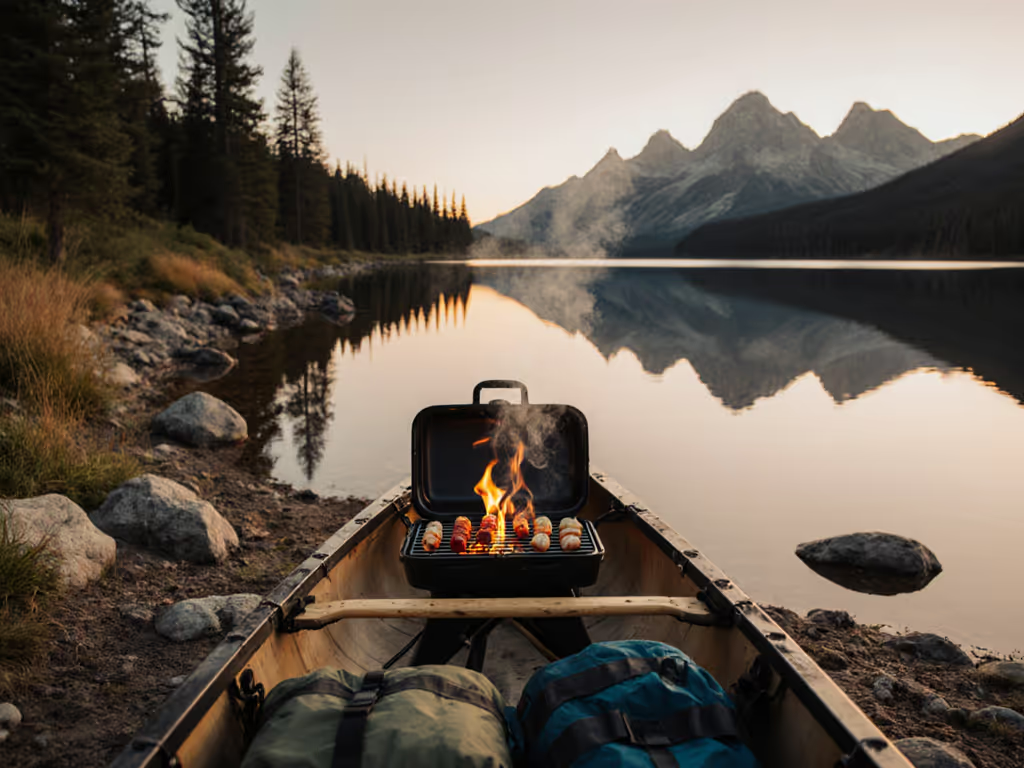
A small camping grill doesn't win by weight alone; it wins when it actually makes it out of your car, clips to a carabiner, and lights on the first try in wind and damp. For paddlers and ultralight canoe campers, the difference between a grill you'll use and one gathering dust at home is measured in packed cubic inches and fuel availability at a random rest stop. Whether you're planning lunch on a sandbar or dinner after a long portage, the best portable travel grill is the one you'll actually carry and fuel anywhere. This ranking prioritizes real-world packability, honest cook power, and fuel redundancy (not boutique features or marketing BTUs). Let's walk through the top contenders and decode what actually matters for kayak-specific trips.
Why Grill Selection Matters for Paddlers
Unlike backyard grilling, kayak camping imposes hard constraints: your grill must survive being lashed to a deck, tolerate spray, and fit inside a dry bag or pannier. Wind at water level is relentless, and your fuel source (whether propane, butane, or charcoal) must be findable in a small town fifty miles from anywhere. Most off-the-shelf portable grills are designed for car camping or tailgates, where weight and footprint are afterthoughts. For paddlers, they're deal-breakers.
Your best portable camping grill choice depends on three anchors: how it packs, how it performs in crosswinds, and whether you can resupply fuel mid-trip without ordering online. Add cost-per-meal math and material durability (saltwater and rain don't forgive rust), and the field narrows fast. This guide ranks grills by those criteria, not by flashy specs.
The Ranking Framework
Each grill below is scored across five dimensions that matter to paddlers:
- Pack-and-carry footprint (does it fit a dry bag or strap cleanly?)
- Setup speed (can you be cooking in under 2 minutes?)
- Wind resilience (does it flame out in 15 mph gusts?)
- Fuel logistics (can you source it in any town?)
- Cost per meal (what's the total system price, and how efficient is it?)
A grill may excel at one or two; the ranking rewards balance and honest tradeoffs. For step-by-step wind mitigation, see our windy-day grilling fixes.
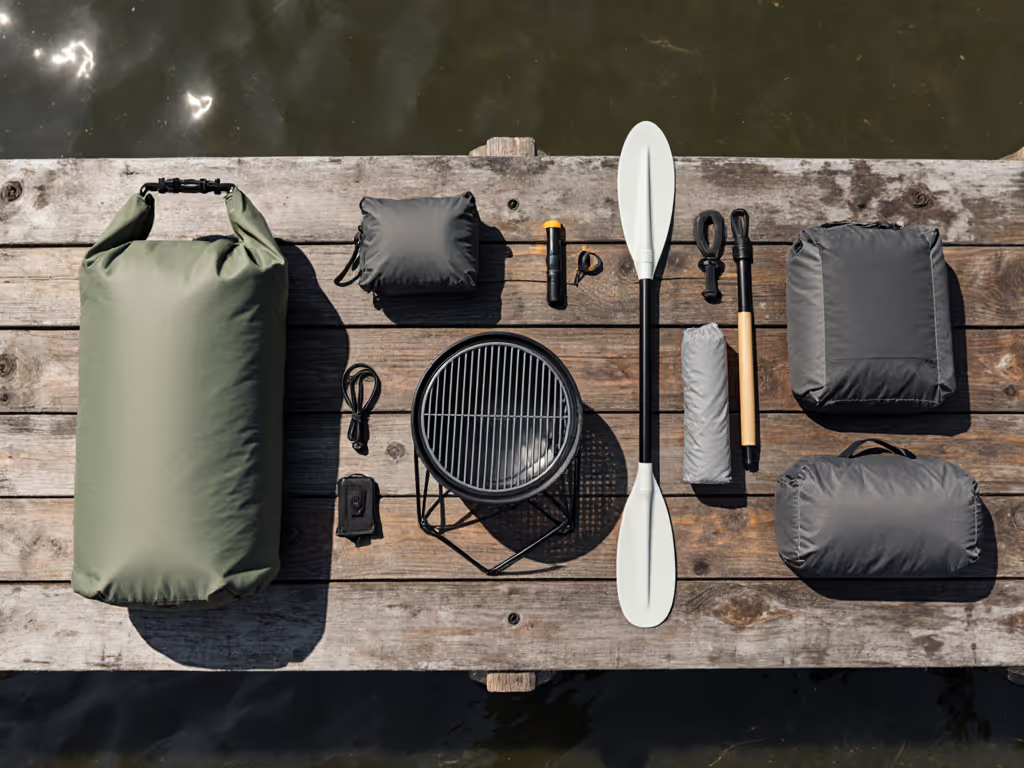
The Ranked Grills
1. nomadiQ Portable Propane Grill - Best Overall for Kayak Camps
Weighing just 12 pounds with a measured 226 square inches of cooking surface, the nomadiQ is a master of portability, simplicity, and efficiency. It runs on two independently controlled propane burners that produce 9,200 BTUs combined, letting you sear on one side while simmering on the other. The grill folds flat to 5 inches wide and includes a handy shoulder strap and ergonomic topside handle (features that matter when you're carrying a wet paddle and grinding up a sandy beach). Two locking mechanisms on each side make packing up just as fast as setup.
Why it wins for kayakers: The dual-burner design lets small groups cook two proteins or a side simultaneously, cutting meal time in half. At 12 pounds, it's heavy enough to feel stable on sand and light enough not to exhaust you. Standard 1 lb propane canisters (available at nearly every gas station in North America) fit inside or strap to the exterior. Cost per meal: roughly $1.50 for fuel plus $0.20 per meal amortized over the grill's lifetime.
Honest trade-off: The 226 sq in surface won't comfortably sear steaks for six; it's optimized for couples and trios. In sustained 20 mph wind, you'll want a simple foil windscreen (negligible weight). The grill itself costs ~$200-$250, a solid mid-range investment.
2. Vargo Titanium Bifold Grill - Best for True Ultralight Trips
If every ounce matters (mountain bike touring, foot access only, or a full-load portage) the Vargo Titanium Bifold is your answer. This kit weighs under 2 pounds, packs flat as a notebook, and uses charcoal or wood as fuel. No fuel canister to carry or resupply; you gather twigs at camp.
Why it wins for paddlers on minimal budgets: Titanium won't rust, even after years of saltwater spray. Charcoal or foraged wood is free and legal in most parks that allow campfires. You're buying fuel at zero additional cost, making the per-meal math unbeatable ($0.05 for charcoal, $0 for wood). Total system cost: ~$70-$90.
Honest trade-off: Setup requires hand-fueling charcoal and careful flame management; ignition depends on matches or a lighter (bring backup). No temperature control knobs; you manage heat by airflow and grate height. Wind can scatter ash into food. Less intuitive for cold-weather paddlers new to charcoal cooking. Cook time is slower than propane, so plan 15-20 minutes from lighting to flame.
3. UCO Grilliput Portable Grill - Best Packed Size
The UCO Grilliput collapses into a thin cylindrical tube measuring 11.4 x 0.9 inches and weighing under 20 ounces. Despite its diminutive packed form, it is surprisingly stable on uneven ground, with plenty of room for coals underneath.
Why it wins for pannier or deck storage: It's genuinely the most compact grill on the market. If your kayak or panniers are cramped, this is your non-negotiable choice. At $30, it's the lowest entry price, making it ideal for beginners uncertain whether they'll grill regularly.
Honest trade-off: Assembly is fiddly (expect 3-4 minutes of fumbling the first time). No legs or elevation; you're cooking 3-4 inches off the ground on sand or rocks, which can be unstable if you're clumsy. Charcoal only; expect 15-20 minute preheat and slow meal service for groups. The modest cook area suits solo or duo paddlers; families will outgrow it fast.
4. Coleman Deluxe Camp Grill - Best Overall for Groups
Tested as the best overall camping grill by Outdoor Life, the Coleman Deluxe Camp Grill balances cook area, durability, and affordability. It's taller than ultra-compact models, which means a healthy bed of coals underneath and stable leg placement on soft ground (critical for kayak camps on sand or silt).
Why it wins for group trips: Larger surface area (vs. Grilliput) means you can cook burgers or fish for four without rotating batches. Coleman's reputation for reliability is well-earned; the grill handles weather and saltwater better than discount alternatives. Charcoal fuel is available everywhere and costs pennies per meal.
Honest trade-off: Packed size is larger (though still manageable in a gear bag). As a charcoal grill, it requires fuel management and ash cleanup. Weight hovers around 15-20 pounds depending on the variant (noticeable on a long portage but acceptable for car-to-water launches). Cost: ~$60-$100.
5. Weber Go-Anywhere Charcoal Grill - Best Stability
For paddlers who prioritize a solid, level cook surface and don't mind charcoal, the Weber Go-Anywhere delivers dependable heat and weather resistance. Its compact footprint and low-profile legs make it stable on uneven terrain, a feature that matters on sandbars and hillside camps.
Why it wins for comfort and safety: Wider stance than bifold models means less tipping risk, especially important around kids or when you're tired after a long paddle. Weber's cast iron grate is forgiving and durable; it won't warp after one trip. The grill is easy to clean: soak the grate, brush, and you're done.
Honest trade-off: Charcoal-only fuel and moderate pack size (~12 inches x 8 inches when nested). Wind still affects charcoal performance, so expect to nurse coals in gusts. Not ideal for sub-freezing trips (charcoal ignition slows dramatically in cold). Cost: ~$80-$120. Planning snow camps? Review our cold camp cooking tests before you pack charcoal.
6. Char-Broil Grill2Go - Best Fuel Integration
This compact propane grill earns a mention for one standout feature: its lid has internal space for three propane canisters, a capacity that no other top-tier portable grill matches. For multi-day trips where fuel resupply is uncertain, that's a game-changer.
Why it wins for remote trips: Carry three 1 lb propane canisters inside the grill itself, and your fuel is protected from water and organized. You're never stranded hunting a gas station; you pack fuel redundancy from home. Propane means faster meal prep and better sear marks than charcoal.
Honest trade-off: Cook surface is modest compared to larger models. The grill is slightly heavier than the nomadiQ (around 15-18 lbs with full canisters). Propane prices fluctuate; expect $2-$3 per lb canister when you're buying retail. Total system cost: ~$150-$200 including spare canisters.
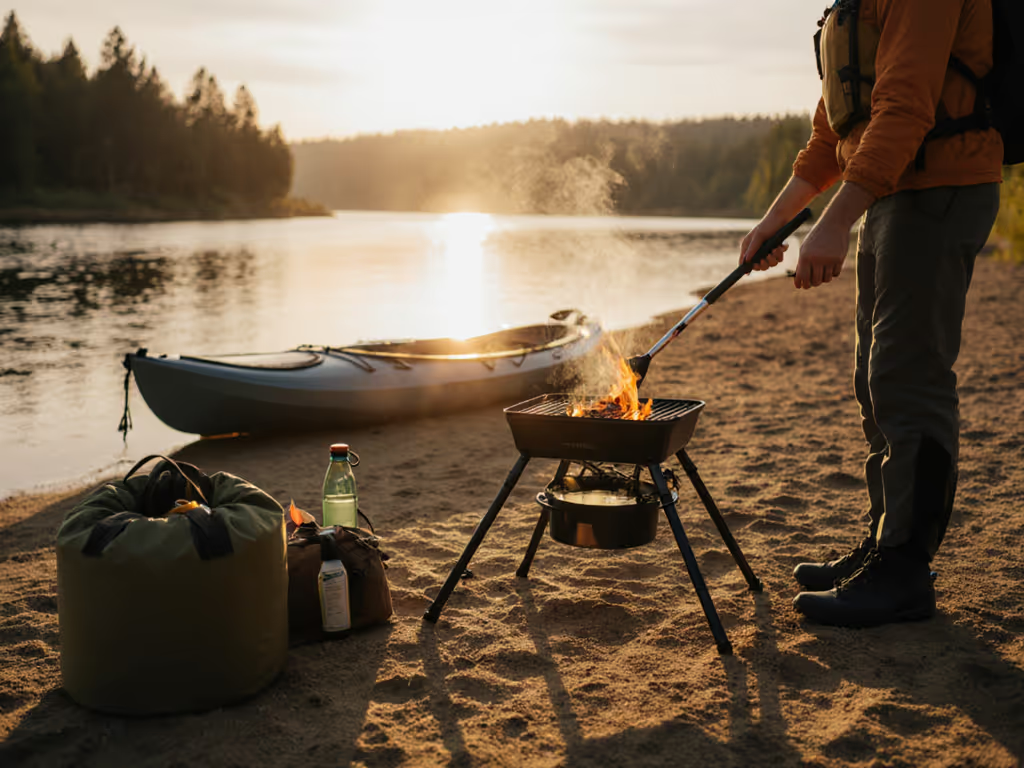
Fuel Logic: The Hidden Decision
Carry the fuel you can buy twice in town.
This isn't arbitrary advice; it's the difference between a stress-free meal and a dinner plan that evaporates when the vendor is closed. Propane is available at virtually every gas station and hardware store in North America. Butane is harder to find in rural areas and fails in cold weather. Charcoal is universal but requires ash management and space for a larger pack. Your fuel choice determines where you can cook and how much contingency you need to build in.
I once packed a folding grill and both butane and propane adapters on an overnight train to the coast. The station vendor had sold out of butane by the time I arrived (a perfectly avoidable panic). That ride taught me that redundancy and standard canisters matter more than a boutique fuel's theoretical edge. A tiny adapter and a backup canister (or a second fuel type) saved dinner for four and my credibility as a trip organizer. If you expect to swap fuels on trips, read our safe gas conversion guide first. For kayak camps, extrapolate that lesson: know what fuel is available in the nearest town, carry backup, and choose a grill that accepts the most common option in your region.
Plain-Language Checklist: How to Choose
Use this hierarchy to narrow the field:
- Pack-and-carry constraint first. Does it fit your dry bag, panniers, or kayak's deck? If not, everything else is moot. (Winner: Vargo or UCO.)
- Fuel availability in your paddling region. Can you resupply propane or charcoal in the towns you'll visit? (Winner: Propane-based grills like nomadiQ in populated areas; charcoal anywhere.)
- Group size and meal variety. How many people, and do they need searing AND simmering at once? (Winner: nomadiQ or Coleman for groups.)
- Weather exposure. Cold and wind, or mild seasons only? (Propane handles cold better; charcoal struggles below 40°F.)
- Budget and cost per meal. Is total system cost or lifetime efficiency the limiter? (Winner: Vargo for long-term economy; UCO for upfront cash.)
Material Durability: Saltwater and Rust
If you're paddling coastal trips or near large lakes, corrosion is real. For gear that shrugs off spray and salt, check our salt-resistant portable grills. Stainless steel grates and titanium bodies outperform painted steel, especially if you'll rinse in freshwater after each trip. The Vargo Titanium Bifold is literally corrosion-proof; the nomadiQ and Coleman use stainless grates but painted steel bodies (manageable if you towel-dry and store dry). Budget an extra $20-$40 for a fitted waterproof grill bag if saltwater is in your future.
Cost-Per-Meal Math
Here's how to think about true cost:
- Vargo Titanium: ~$80 grill + $0.05 charcoal per meal (split across 100+ meals) = $0.80 per meal amortized over 3 years.
- nomadiQ: ~$220 grill + $1.50 propane + $0.05 per-meal wear = $2.30 per meal (cheaper per meal if you grill 100+ times).
- UCO Grilliput: ~$30 grill + $0.05 charcoal = $0.35 per meal amortized, but limited cook capacity means more prep time.
- Coleman Deluxe: ~$80 grill + $0.05 charcoal = $0.85 per meal; larger capacity offsets fewer trips needed.
If you're paddling 8-12 trips per year, the Vargo or Coleman amortize fastest. If you're a weekend warrior (2-3 trips), any grill pays for itself within a season.
Your Next Move: Build Your Modular Kit
Don't buy a grill in isolation. Build a system:
- Grill + fuel choice. Start with your pack constraint and fuel availability (steps 1-2 above), then pick your grill.
- Fuel redundancy. Buy at least two canisters or a second fuel type. One always lives in your car; one travels with the grill.
- Windscreen and stabilizers. A DIY foil windscreen weighs ounces and cuts fuel consumption by 20-30% in wind. PVC or aluminum feet add grip on sand.
- Cleanup kit. Stainless steel grill brush, small biodegradable soap, microfiber towel. Pack them with the grill so you never leave soot in the car.
- Heat-resistant storage. A fire-rated bag or neoprene case lets you pack the grill while it's still warm, shaving minutes off camp breakdown.
Total modular cost: grill ($30-$250) + fuel ($20-$40) + windscreen and brush ($15-$25) + storage ($20-$40) = $85-$355 depending on your tier. This is your complete portable cooking kit, tuned to your constraints.
Start with what you'll carry today, not what the spec sheet promises. The grill you own and use beats the one you research endlessly and leave at home. Choose based on your kayak, your trips, and the fuel available in the towns you'll paddle near. Then go cook.
Related Articles