
RV Slide-Out Grills Compared: Setup, Travel & Rules
By Amina Haddad • 6th May
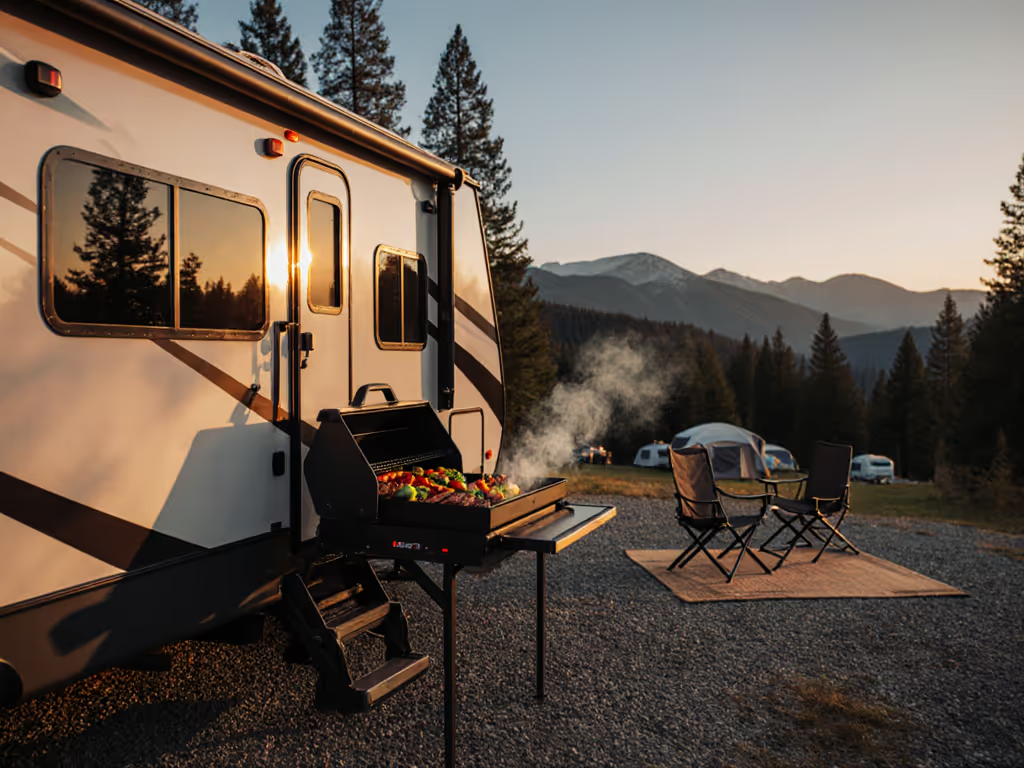
When you're living mobile (whether you're transitioning between RV parks or exploring remote overlanding routes), cooking becomes about more than flame and food. It's about compliance with shifting regulations, materials that won't corrode after a saltwater dash, and cleanup that takes minutes, not hours. An RV slide-out grill comparison reveals that integrated RV grill systems aren't just space savers; they're the backbone of rule-compliant, zero-friction cooking. For a refresher on site-safe fueling, clearances, and spark control, see our portable grill safety rules.
I've guided RV owners through fire-ban transitions, helped them retrofit containment systems, and watched them pack away spotless sites. The lesson I've learned (and lived) is that heat you can explain to a ranger, pack you can trust becomes the difference between dinner on the road and cold sandwiches while neighbors navigate fresh restrictions. This guide translates the grill trade-offs into gear choices that protect both your meal and your reputation.
What Defines an RV Slide-Out Grill?
An RV slide-out grill is a cooking unit that mounts or retracts into the sidewall, underbody, or external cabinet of a motorhome, fifth wheel, or travel trailer. Unlike freestanding portable grills, space-efficient RV grills integrate into your rig's footprint, eliminating storage penalties and the rattle-and-rust problem of gear bouncing in transit.
Key Distinctions from Portable Grills
- Fixed mount point: Bolted or riveted to the RV structure, not packed and repacked.
- Weather shroud: Built-in shield reduces wind exposure and roadside dust accumulation.
- Utility integration: Propane line runs direct from the RV tank; no separate canister juggling.
- Slide or swing action: Deploys in seconds; no leg assembly or leveling dance.
Common Configurations
- Drop-down tray grills: Fold down from an external cabinet, often found on Class A and B motorhomes.
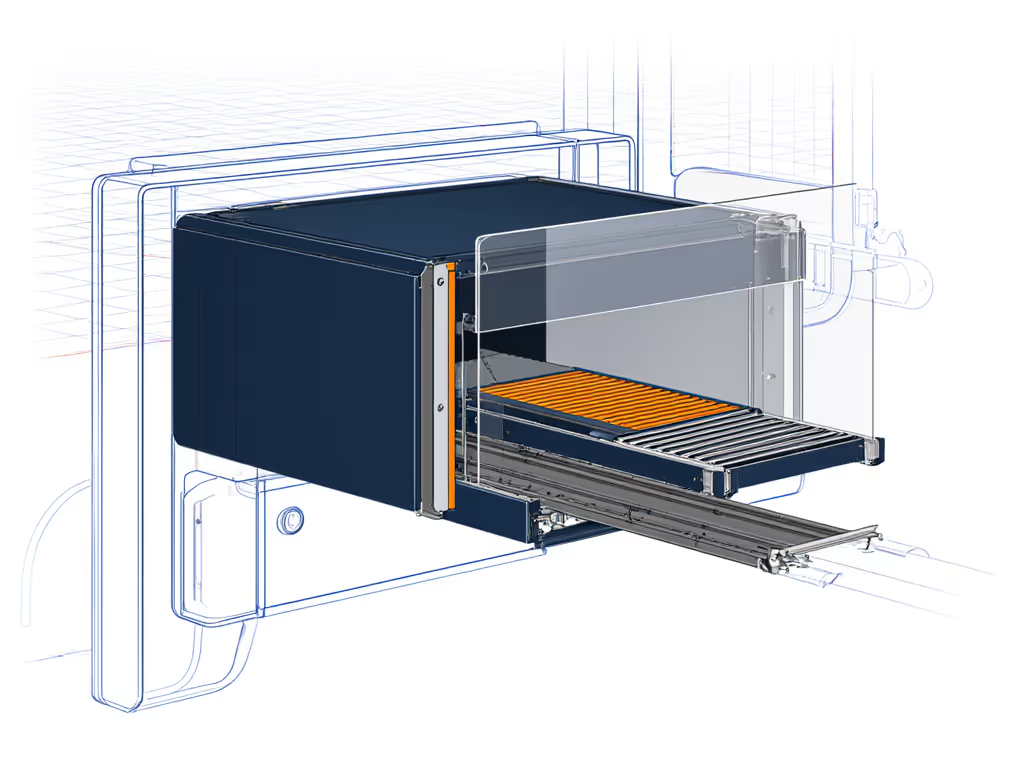
- Slide-out drawer units: Extend horizontally from the RV side, standard on travel trailers and fifth wheels.
- Pedestal-mounted units: Bolted to the bumper or exterior frame, semi-integrated for easier retrofit.
- Compartment-integrated grills: Permanently housed in a sealed locker with hinged access.
Comparative Analysis: Setup, Travel & Rules
Setup Speed & Intuitiveness
Integrated RV grill systems vary widely in pre-deployment time. Drop-down trays typically require:
- Unlatch or unlock mechanism (2-5 seconds)
- Hinge down to horizontal (5-10 seconds)
- Open propane valve at grill control or RV regulator (immediate, if already configured)
- Ignite via piezo or match (5-10 seconds)
Total time: 15-30 seconds (a stark contrast to a portable setup requiring legs, leveling, and fuel attachment).
Slide-out drawer units add:
- Pull-extension action (5-10 seconds)
- Lock-into-place mechanism (5 seconds)
- Propane valve activation (immediate)
- Ignition (5-10 seconds)
Total time: 20-35 seconds. By comparison, a freestanding portable grill demands leg assembly (1-2 minutes), fuel canister threading, regulator attachment, and ignition troubleshooting (often 3-5 minutes for novices), creating the friction that spoils spontaneity. If you’re weighing integrated vs carry-along options, explore our RV and van-life grill picks that prioritize secure storage and sub-2-minute setup.
Heat you can explain to a ranger, pack you can trust: An integrated system's fixed regulator, manufacturer-certified mounting, and traceable fuel source are auditable. A ranger inspecting your site sees certified equipment, not a jury-rigged burn risk.
Regulatory Compliance & Fire Ban Navigation
Motorhome cooking solutions must navigate overlapping jurisdictions:
- National parks and forests: Many ban charcoal; propane grills allowed if contained and 15+ feet from structures.
- State and provincial regulations: Some coastal areas restrict open flame; permanent RV-integrated propane systems often receive exemptions.
- Private RV parks: Specific fuel and grill models listed in lease agreements.
- Local air quality: During pollution warnings, certain counties ban all outdoor cooking.
RV grill installation preempts conflict because:
- Propane-only fueling is documented in the RV's spec sheet.
- Containment is engineered and inspectable by park rangers or fire marshals.
- Utility integration (direct tank connection) eliminates the question of canister legality.
Policy-aware decision framework:
| Rule Scenario | Integrated RV System | Portable Grill |
|---|---|---|
| Charcoal ban (fires only) | ✓ Propane allowed | ✗ Charcoal banned |
| Open flame ban | ✗ Needs spark arrestor or lid | ✓ Enclosed system possible |
| Propane-only parks | ✓ Direct tank feed | ✓ Canister, if sourced locally |
| Fire marshal clearance | ✓ Pre-approved mount | ? Case-by-case inspection |
| Proximity to structures | ✓ Fixed 15 ft+ distance | ✗ Moveable, risk of drift |
Fuel Efficiency & Accessibility
A propane-integrated system draws from the RV's main tank, eliminating the guesswork around butane performance in cold climates or altitude. Most motorhome cooking solutions consume 0.5-1.5 lb of propane per cooking session (30-45 minutes of mixed burner use).
The practical win: Refueling is a routine RV service, available nationwide at truck stops and RV parks. No dependency on small-canister availability at retail chains, which varies by region and season. For RV owners chasing consistency across diverse regions, direct-tank integration is a material advantage that portable systems simply cannot replicate.
Material Durability & Rust Resistance
Integrated units exposed to coastal, high-humidity, or frequent-wash environments demand rust-resistant materials. Coastal travelers should consult our salt-resistant portable grills guide for material choices that survive sand and salt spray. Industry standards specify:
- Stainless steel cooking surfaces: 304 or 316 grade for corrosion resistance. (316 is premium; common in marine-grade RVs.)
- Powder-coated or anodized frame: Protects steel underbody from salt spray and moisture.
- Sealed ignition and gas valve assemblies: Conformal coating prevents corrosion inside propane regulators.
Material durability notes from field experience:
- Aluminum and lower-grade stainless (430 or 304 with poor finishing) corrode within 2-3 seasons near saltwater.
- Powder-coat longevity depends on maintenance: rinse after beach days, dry fully before closing the compartment.
- Sealed valve assemblies last 5+ years; exposed threaded connections fail sooner if salt water pools around them.
Many RV manufacturers skimp on stainless for budget units. Retrofitting an aftermarket integrated grill? Prioritize 316 stainless or full anodized aluminum construction. The upfront cost difference (often $200-$500 more) pays back in season longevity and saleability of the RV.
Cleanup & Pack-Away Protocols
Here's where integrated RV grills shine (and where field discipline matters most).
Cleanup Checklist
After every cook session:
- Cool-down: Allow 10-15 minutes with burners off and propane valve closed.
- Ash removal: If equipped with a drip tray, slide out and empty into a designated fire-safe container (not loose into a trash bag).
- Grate scraping: Brush cooled grates with a grill brush, moving debris into the drip pan.
- Wipe-down: Damp cloth over exterior; dry immediately to prevent salt spotting.
- Drip pan disposal: Empty into a trash receptacle, rinse the pan with RV gray water if available, or store a disposable liner for road days.
- Valve check: Confirm propane is off and grill latch or hinge is secure.
- Compartment seal: Close the grill cover or cabinet door; ensure no gaps that trap moisture.
Total cleanup time: 3-5 minutes if you stay disciplined. For deeper maintenance steps and fast travel prep, follow our portable grill cleaning guide. This is the hidden advantage of an integrated system: containment prevents the cascade of debris, grease, and ash that plague portable grills, where spilled coals or runoff finds its way into carpet, storage bins, or vehicle upholstery.
Risk mitigation: Storing a hot or ember-filled grill inside an RV compartment risks fire. Some rigs require a heat shield or mandatory cool-down timer. Check your RV manual; many manufacturers spec a maximum compartment temperature or insulation R-value. Ignoring this is a path to insurance claims and worse.
During a dawn launch on a dry river, a ranger tightened restrictions mid-float due to a lightning forecast. Our contained stove (propane fed from the main tank, spark screen fastened, compartment sealed) met the new rules mid-trip. Dinner happened while nearby groups ate cold. Cleanup took two minutes and zero soot in the dry bags. That trip proved compliance and cleanup are as freeing as flame.
Installation & Travel Considerations
Retrofit vs. Factory-Installed
Factory-integrated systems ship with the RV and include:
- Mounting brackets pre-welded to the frame.
- Propane line already threaded and pressure-tested.
- Warranty support if components fail.
Retrofit units require:
- Structural inspection: RV-certified technician confirms wall thickness and frame clearance.
- Gas line installation: New copper or corrugated stainless tubing, with leak-test certification.
- Electrical hookup (if grill has ignition lights or warming features).
- Paint and sealant around new penetrations.
Retrofit labor typically runs $1,500-$3,500, plus parts ($600-$1,500). Evaluate whether a portable grill makes more economic sense for short-term ownership. Planning a custom build? See our van conversion grill installation guide for mounting methods, ventilation, and safety checks.
Travel Stability
Integrated grills are secured by fixed mounts, eliminating the rattle and vibration that plague external storage. However:
- Compartment vibration isolation: Look for rubber isolators or felt gaskets that dampen road buzz.
- Hinge or latch durability: Pivots should be stainless or grease-sealed to resist corrosion and jamming.
- Propane line routing: Inspect annually for chafe marks where lines cross sharp edges or vibration points.
Compliance Documentation
Keep records of:
- Original RV grill installation invoice or certificate of compliance.
- Propane tank last-service date and pressure certification.
- Spark arrestor or wind-screen modifications (photograph for ranger reference).
- Annual safety inspection reports from certified technicians.
These documents earn trust with fire marshals and park rangers. I've seen RVs pass stringent fire checks simply because the owner had a clear paper trail proving routine maintenance and approved equipment.
Space-Efficient RV Grills: Real-World Trade-Offs
Cooking Capacity
- Drop-down trays: 200-350 sq. in. cooking surface. Suitable for 2-4 burgers or equivalent protein.
- Slide-out drawers: 300-500 sq. in. (if dual-burner). Can handle 6-8 burgers, a griddle top, and indirect heat setup.
- Pedestal-mounted: 400-600 sq. in. Approach full-size portable territory but retain fixed-mount benefits.
Choose based on typical group size. Underestimating capacity leads to multi-batch cooking and extended setup time on hot days.
Wind Performance
Integrated systems sit lower to the RV body, reducing wind exposure compared to tall portable stands. However:
- Reflector wall: The RV siding acts as a wind baffle. Winds under 15 mph are negligible.
- Cross-winds: Lateral gusts can cause uneven heat; consider a clip-on windscreen for exposed sites.
- Sheltered parks: Most RV parks position slides downwind of natural tree lines or neighboring rigs, minimizing intervention.
Fuel Diversity & Cold-Weather Performance
All integrated RV grills run on propane from the main tank. This removes the butane-in-cold-weather gamble but commits you to propane sourcing. Cold-climate RV owners: Ensure your RV's main propane system includes heat tape or insulation around exterior regulators. Many models auto-shutoff if tank pressure drops too low (risk below 20°F). A portable backup canister stored inside provides failsafe redundancy.
Conclusion: Pack, Cook, Vanish - Responsibly
An RV slide-out grill comparison isn't just about BTUs or cooking surface. It's about weaving compliance, durability, and cleanup into a system that respects rangers, protects trails, and frees you from the friction that turns a meal into a chore.
Integrated RV grill systems deliver on speed, regulatory alignment, and material confidence. They transform setup from a multi-minute ritual into a 20-second deploy-and-flame sequence. They integrate with your rig's documented fuel infrastructure, making inspections a formality rather than a negotiation. And they enable the cleanup discipline that leaves sites pristine and your reputation unchallenged.
As you evaluate motorhome cooking solutions and slide-out tray grills, prioritize:
- Compliance audibility: Can you explain this grill to a ranger and pass their scrutiny?
- Material spec: Is the stainless steel rated for your geography (coastal = 316; inland = 304 minimum)?
- Cleanup integration: Does the drip management system actually prevent mess, or does it just move the problem around?
- Travel stability: Are mounts, hinges, and propane lines documented and maintained?
The goal isn't perfection; it's the freedom to cook joyfully, meet the rules every time, and move on without apology. Pack, cook, vanish (responsibly) isn't just a phrase; it's the philosophy that RV grill systems, when chosen with care, make possible.
For deeper dives into specific grill models, regional fire ban regulations, or propane system retrofits, consult your RV manufacturer's documentation, local park regulations, and certified technicians in your area. Your next adventure deserves heat you can trust and a reputation you can defend.
Related Articles